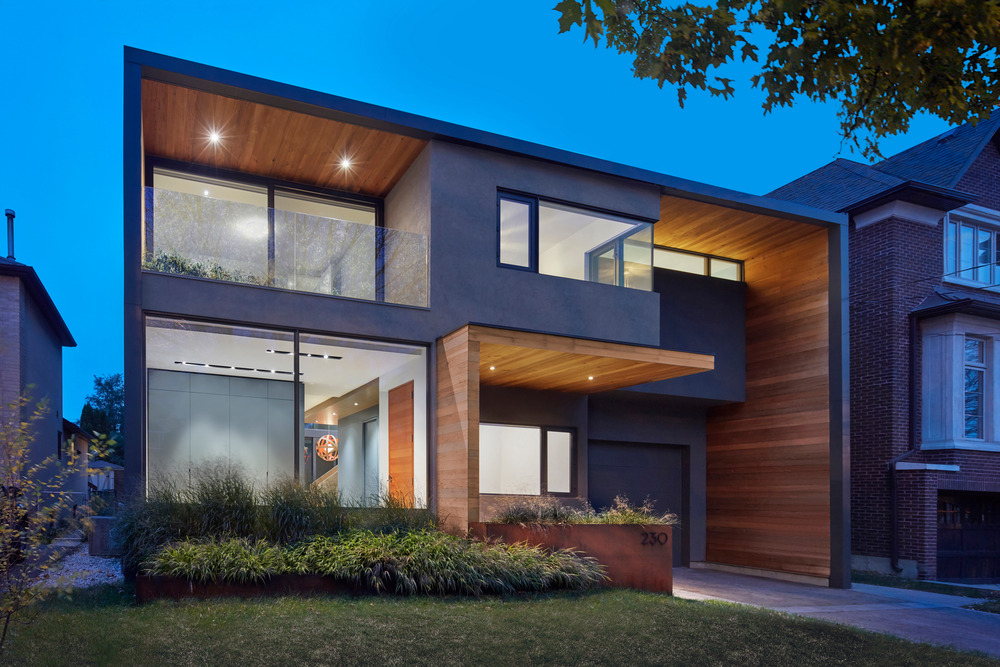
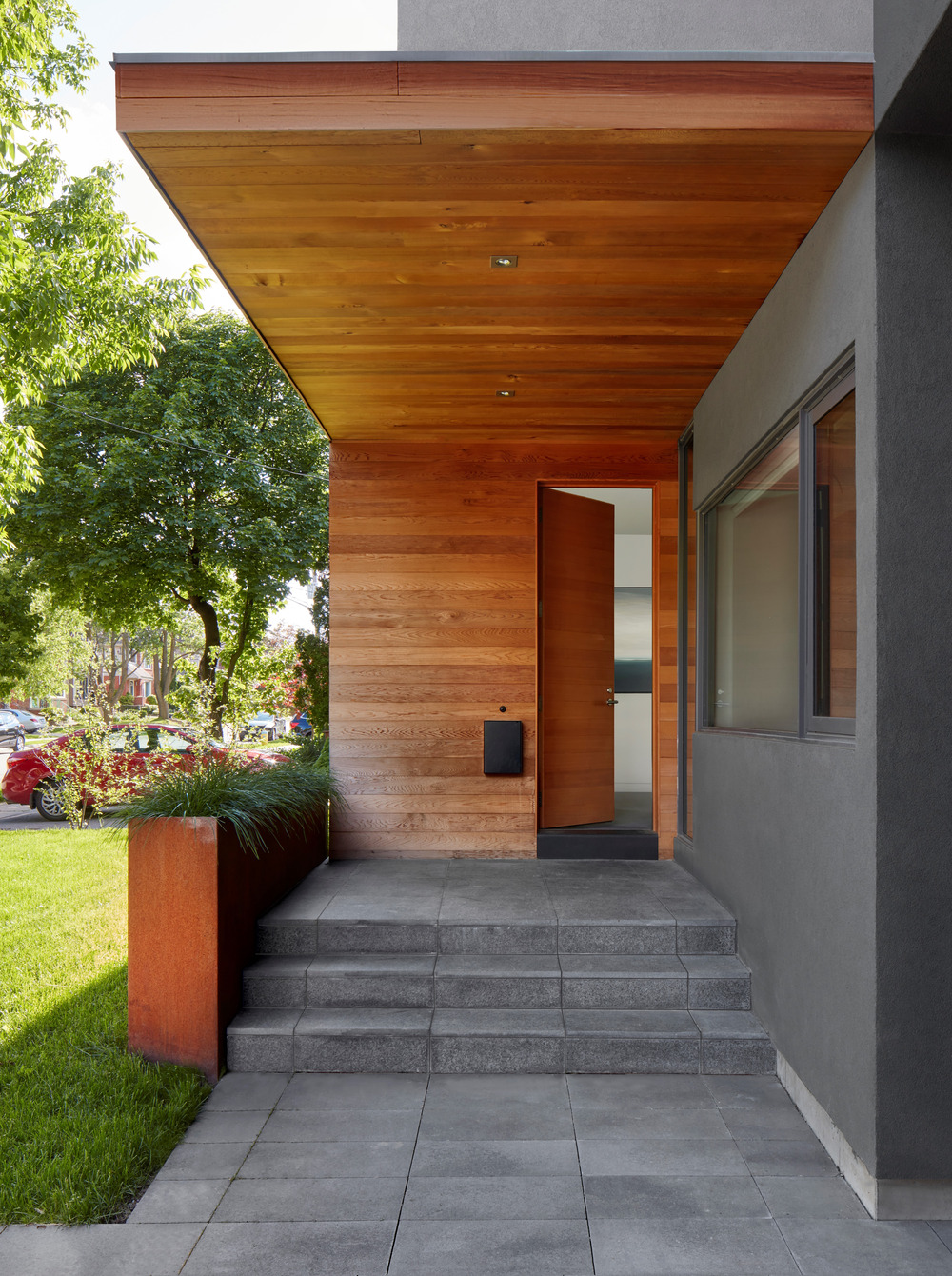
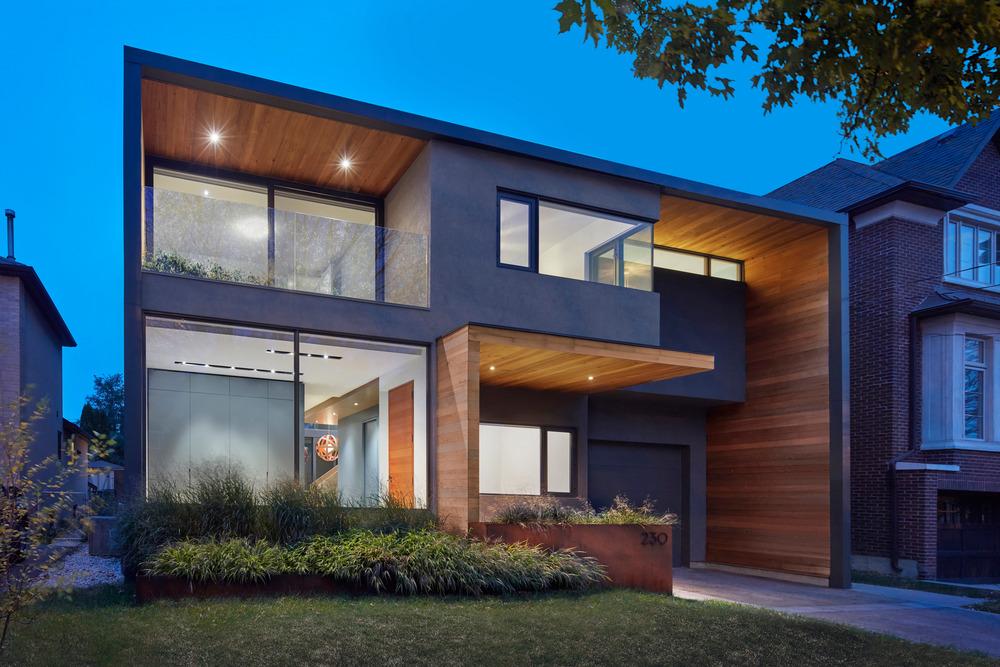
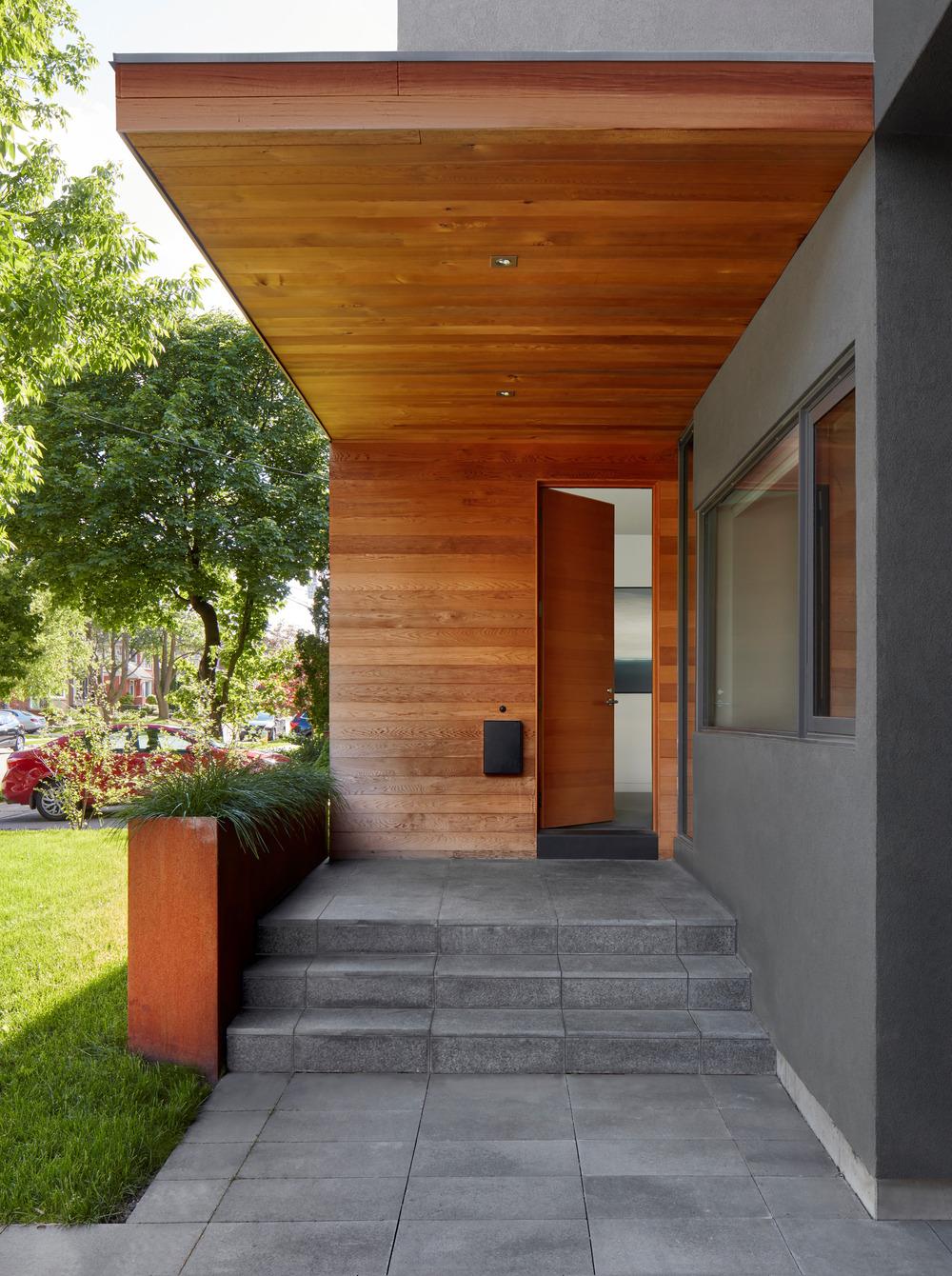
TORONTO — Shift House, imagined by Dubbeldam Architecture + Design, features a stepped façade defined by projecting and retracting volumes, highlighted by contrasting cladding to emphasize the volumetric gestures. Western red cedar fills the void left by retracted volumes, providing a striking foil to the charcoal gray exterior.
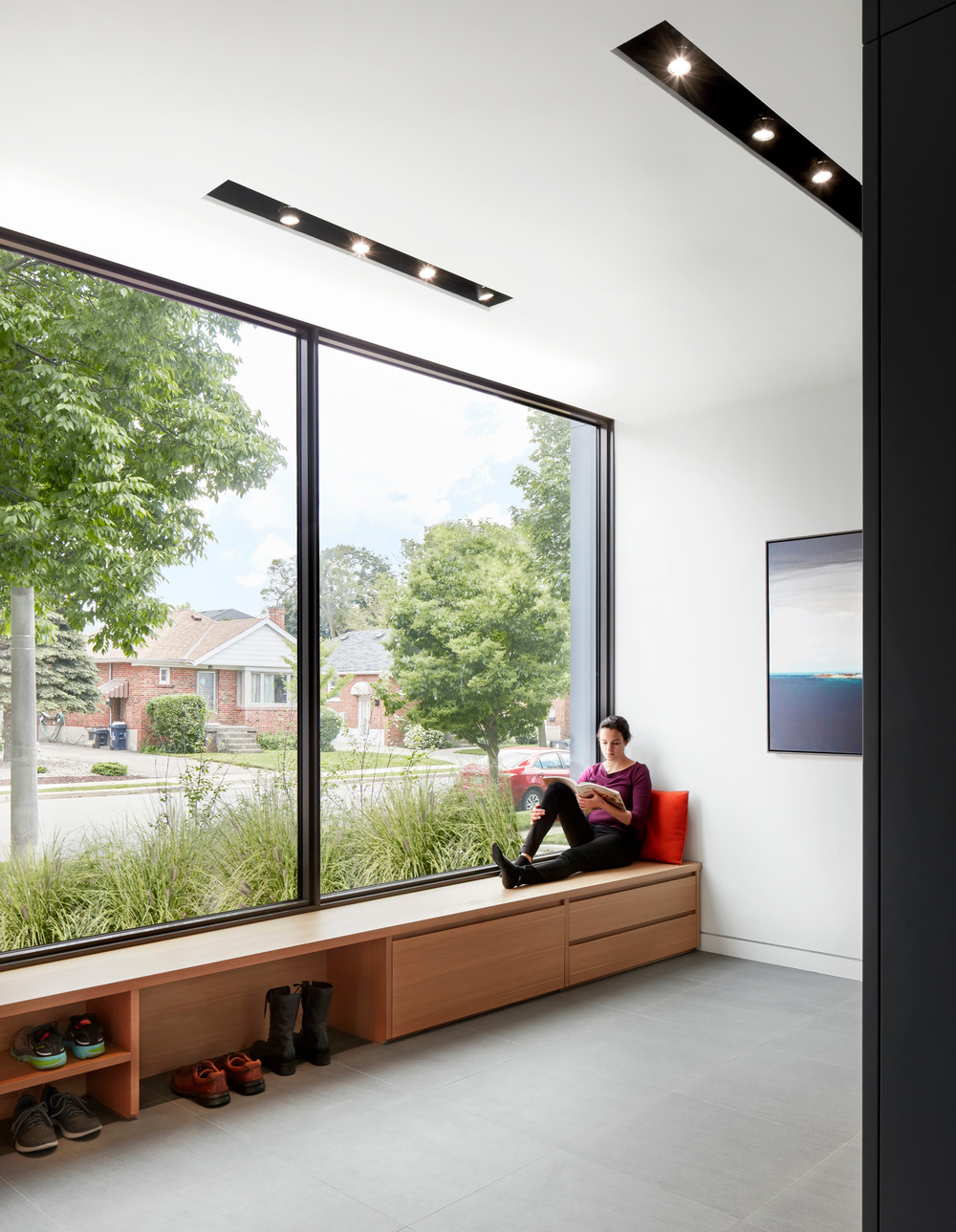
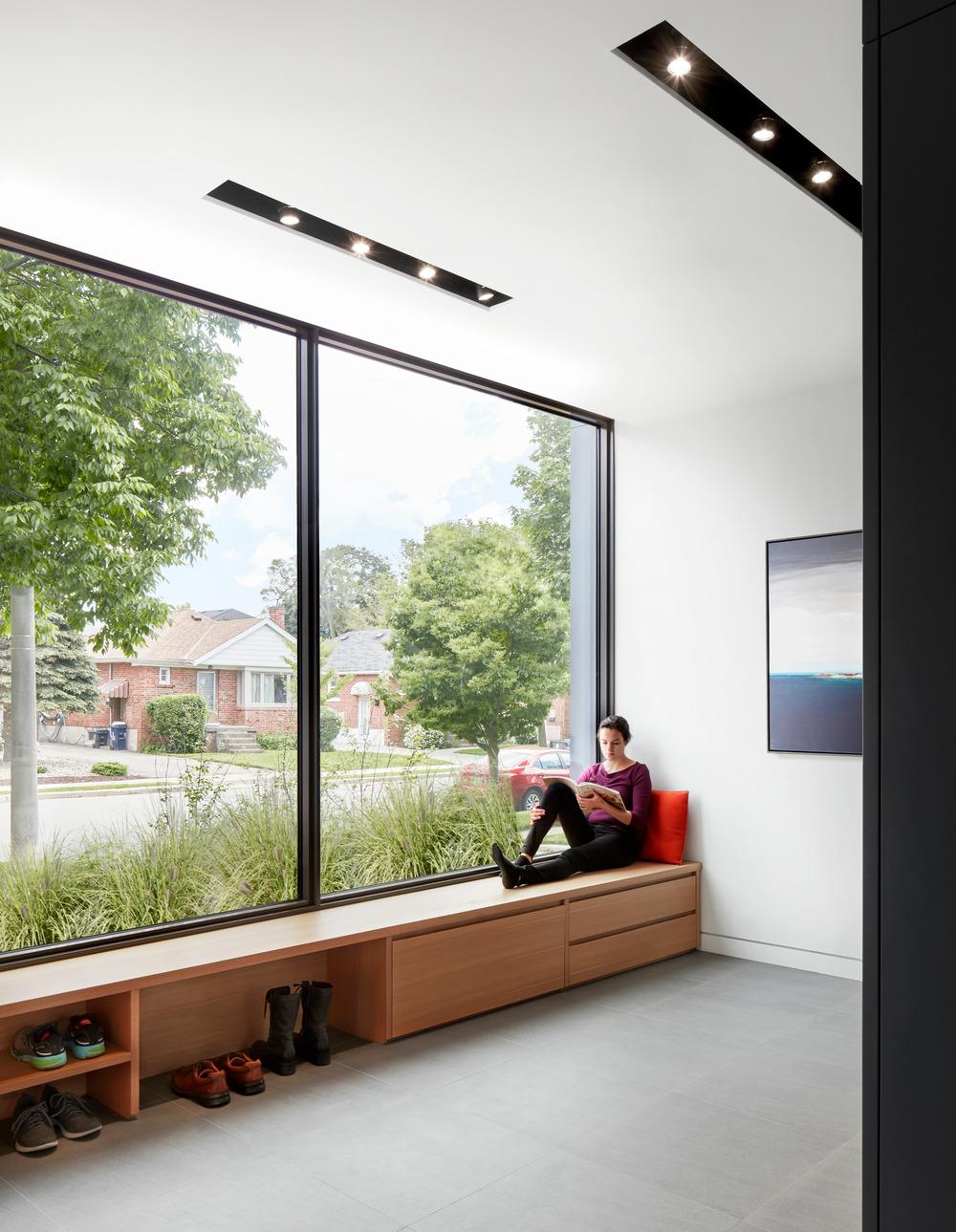
Shift House’s 3,200 square feet are spread over two stories. The layout of the house consists of an interior grid of six staggered volumes, shifted in and out to shape the exterior envelope. The resulting sculpted façade with its interplay of solids and voids creates opportunities for greater light transmission, additional views, and access to outdoor space at multiple levels through corner windows, generous roof overhangs, green roofs, and balconies on the second floor.
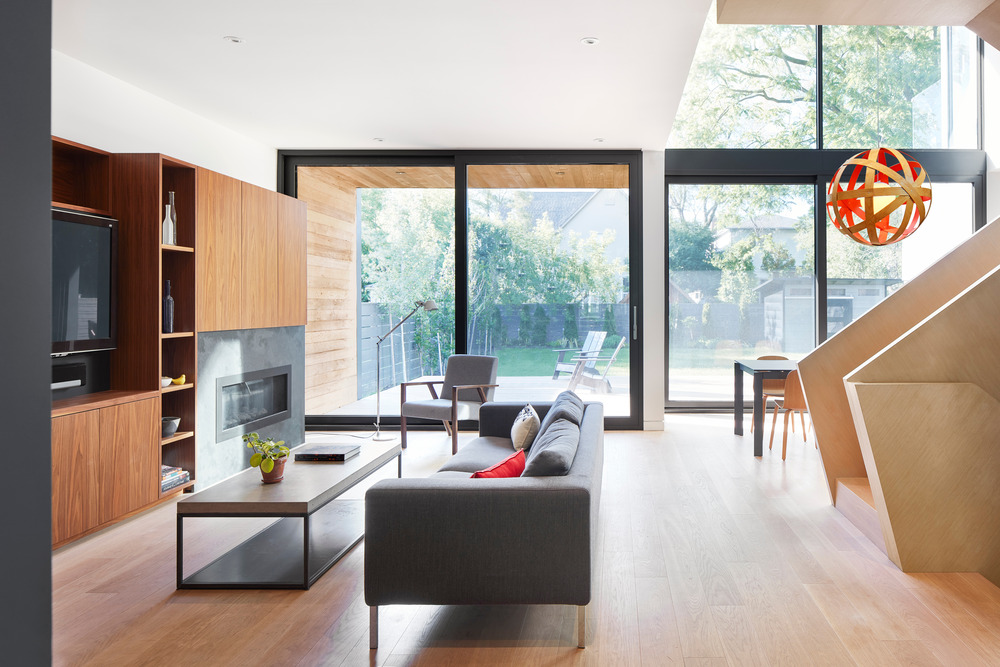
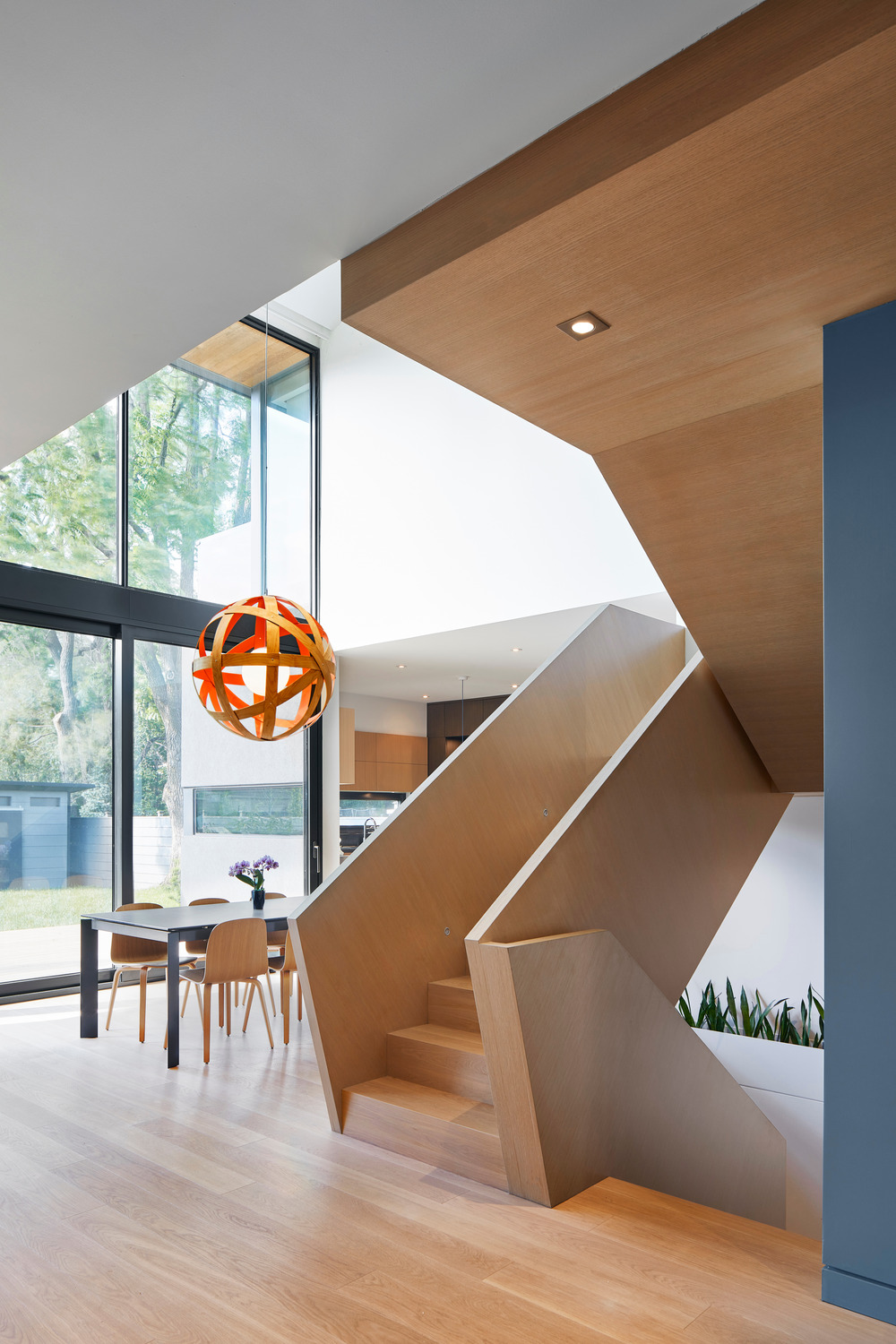
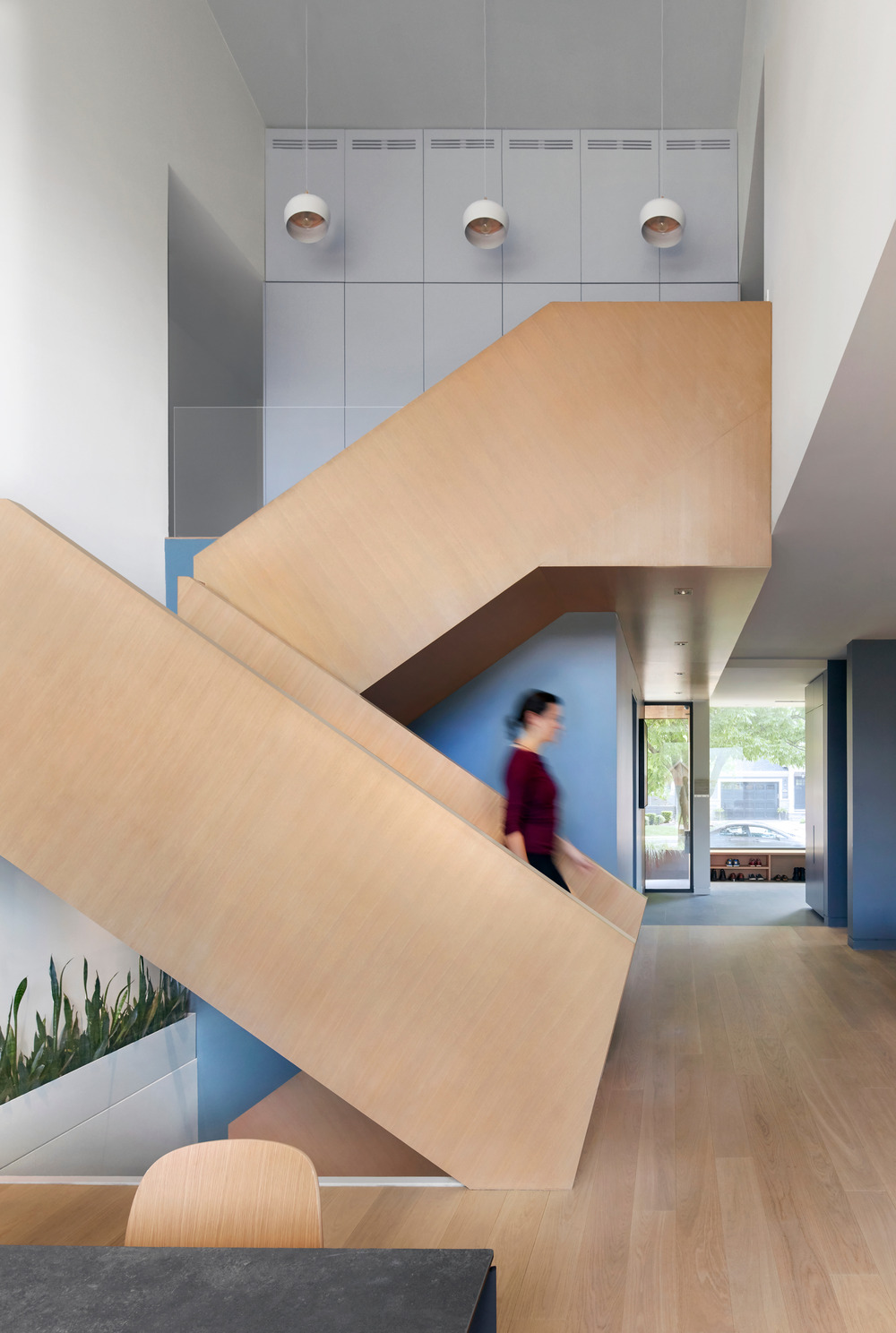
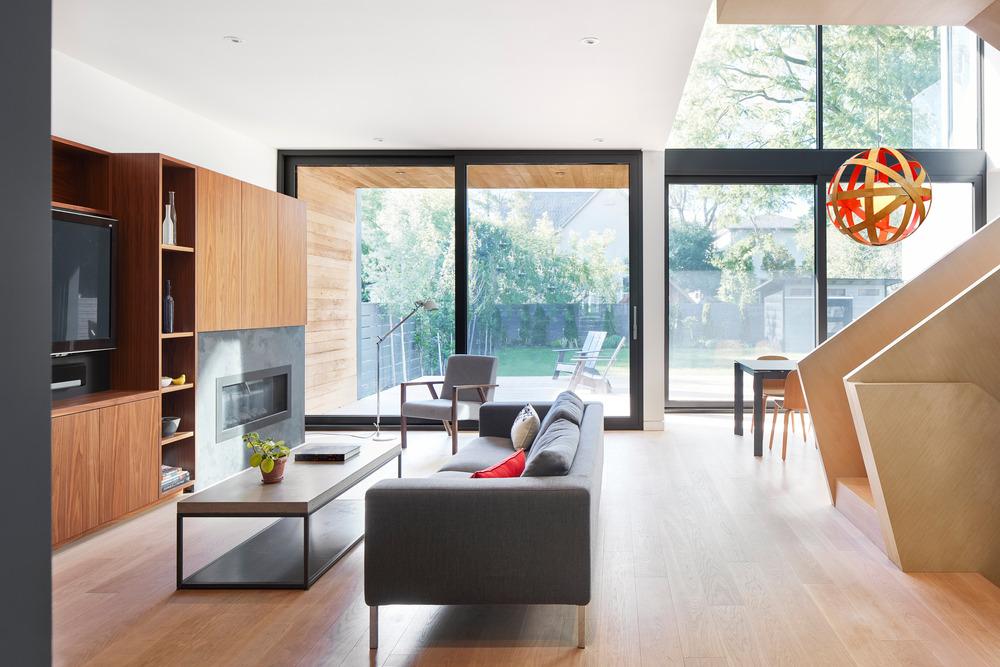
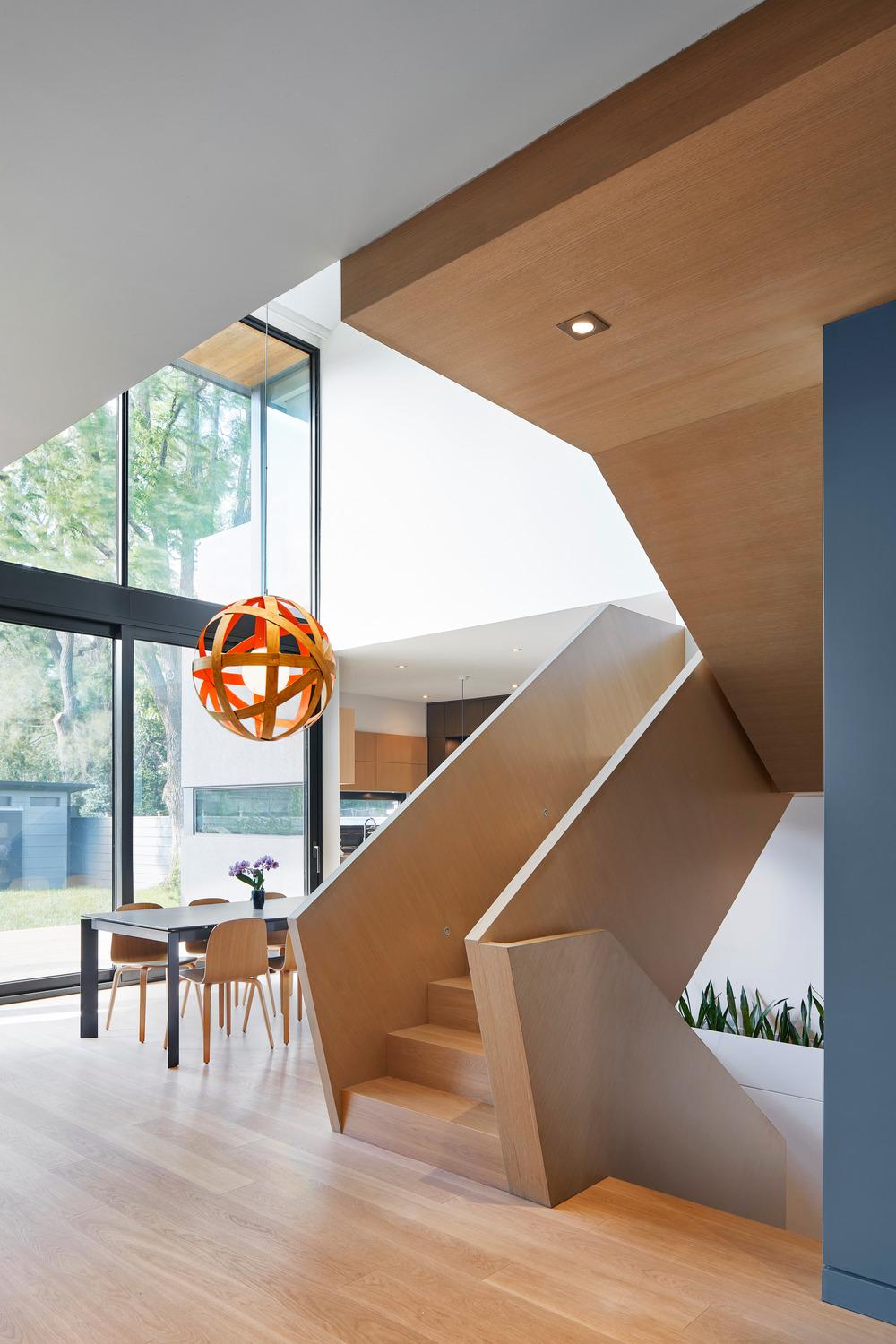
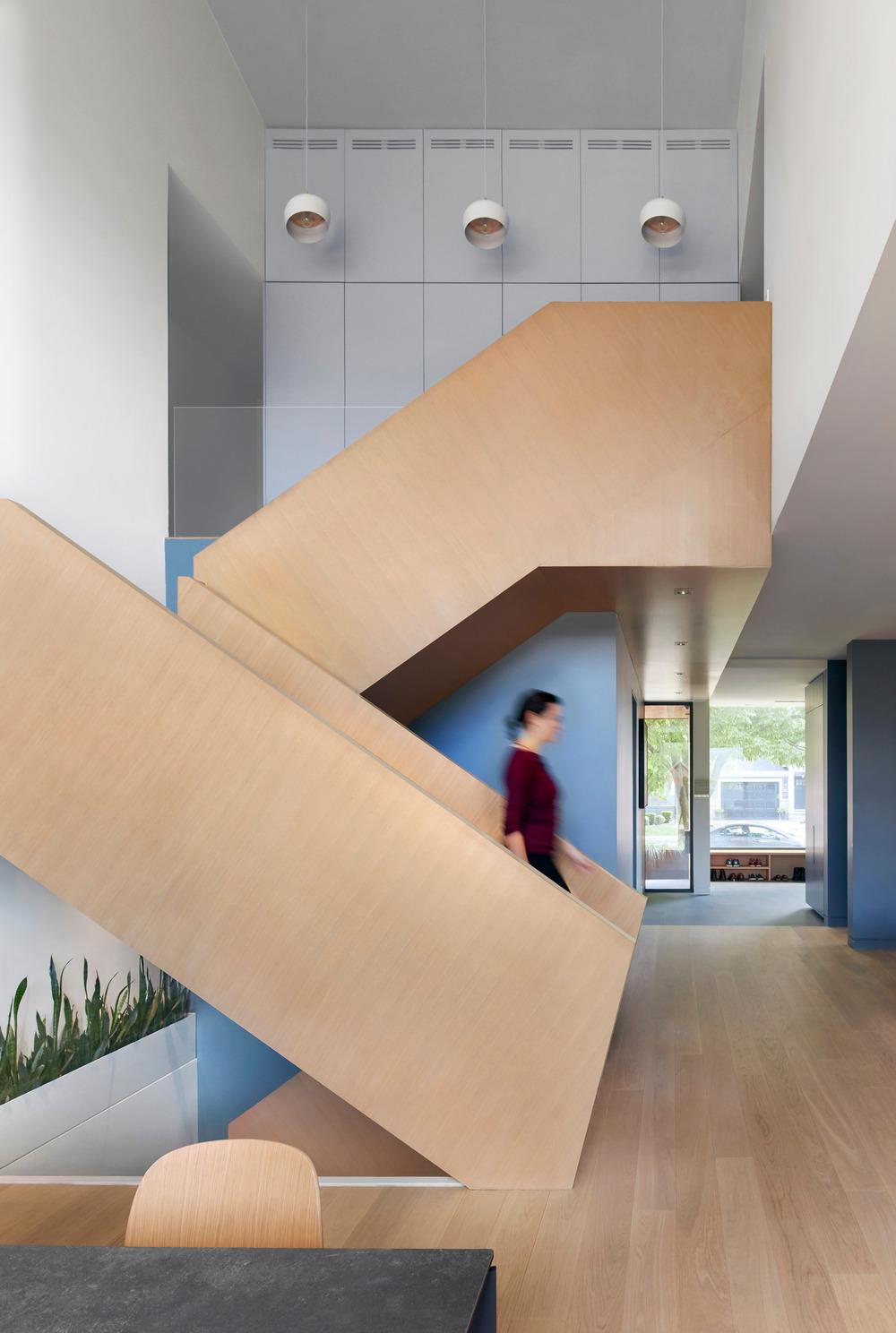
A backyard facing double-height atrium with a fully glazed wall provides an expansive view of the neighborhood’s mature trees, inviting natural light deep into the interior and magnifying the grandeur of the modest space. Central to the atrium is a sculptural staircase defined by a solid balustrade of white oak and Baltic birch.
“The stair’s scissor configuration forms a compelling and dynamic three-dimensional geometric composition, animated by the procession of figures as they ascend and descend between the different levels of the house,” said principal Heather Dubbeldam. "We wanted the design of the stair to impart a sense of craftsmanship, while also evoking a feeling of movement and energy. This is achieved through a distinct woodgrain on a diagonal, and the monolithic nature of the stair guard."
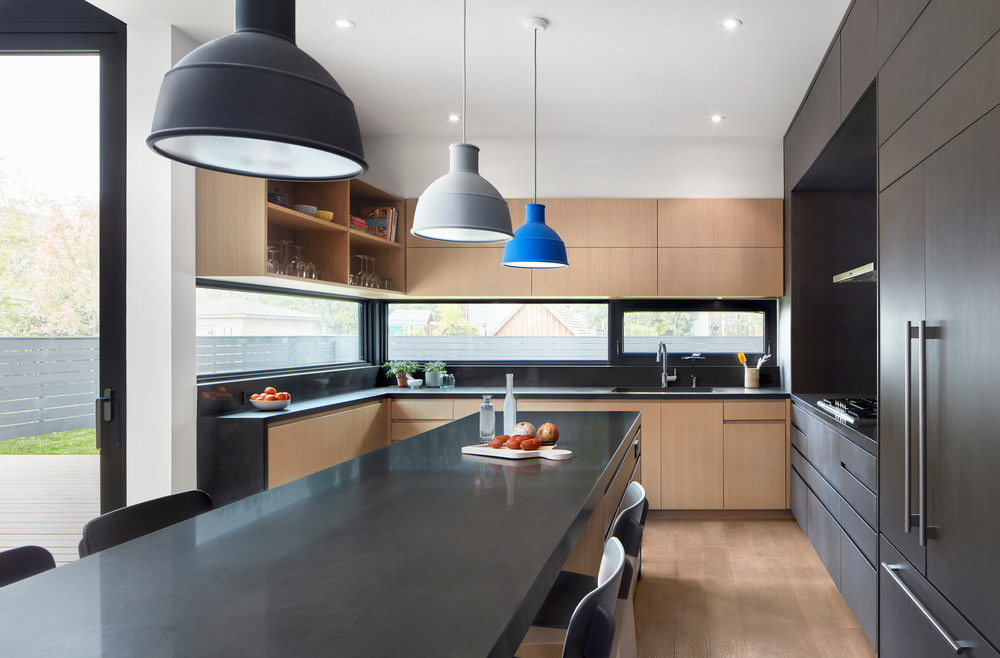
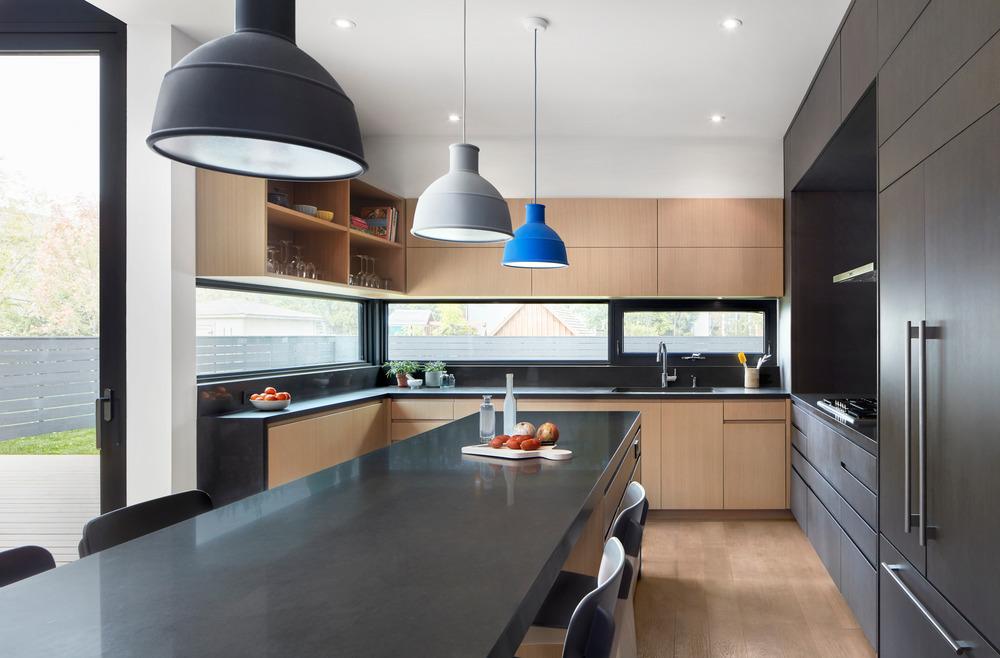
The interior’s volumetric shifts are emphasized by changes in ceiling height, materials, and colors at the transitions. These intentional changes create a heightened awareness of the spatial shifts within the house. In the double height space, projecting second story bedrooms create recessed areas for the kitchen and living room below, while a wood-clad ceiling treatment extends from the staircase to the foyer, defining the edge of one of the internal volumes. Walls painted in shades of grey blue serve as further defining elements against the white walls and oak flooring.
The house employs many sustainable systems. Strategically placed operable windows maximize passive cooling and natural ventilation, while a small pump powers the radiant in-floor heating system. Photovoltaic panels on the roof provide an additional source of electricity while LED light fixtures and an efficient high-velocity cooling system reduce electricity demand. Green roofs and robust landscaping minimize rainwater run-off, and triple glazing and low-E coatings reduce both heat gain and loss.











Have something to say? Share your thoughts with us in the comments below.