MONTREAL — To launch her firm, assemblage studio, architect Claudia Campeau chose to begin with a project that is both deeply personal and revealing of her design approach: the transformation of her Montreal duplex into a single-family home.
Before undertaking the renovation, Campeau and her family lived in the duplex dubbed the Lilac House for nearly three years. This extended period of immersion allowed the architect to gain a nuanced understanding of the site’s qualities and limitations—and, above all, to anticipate its future evolution.
"We really thought about the house in terms of how it could adapt to our needs over time," Campeau said. "I couldn’t design it just for the next five years, because the children will grow up."
Designed to evolve without the need for major future renovations, the project incorporates a flexibility essential to family life. Thus, certain rooms can change function over time—guest room, office, workshop, and more.
With a 21-foot-wide facade, the 1924 duplex presented significant constraints: narrow, attached to neighboring properties on both sides, poorly insulated, and marked by successive alterations over time.
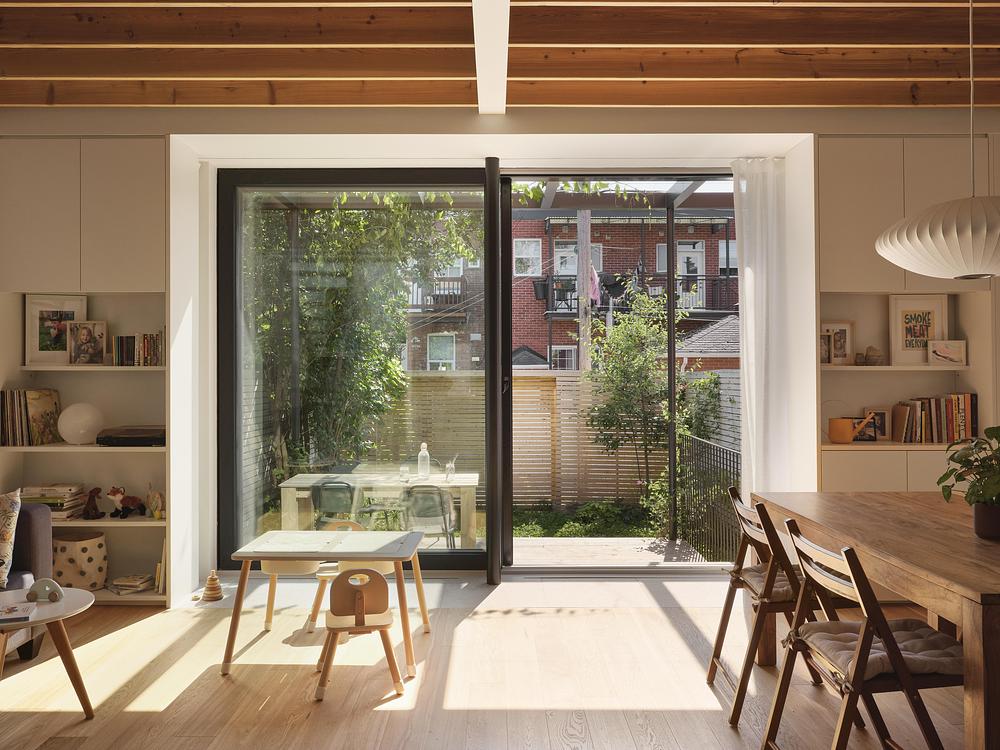
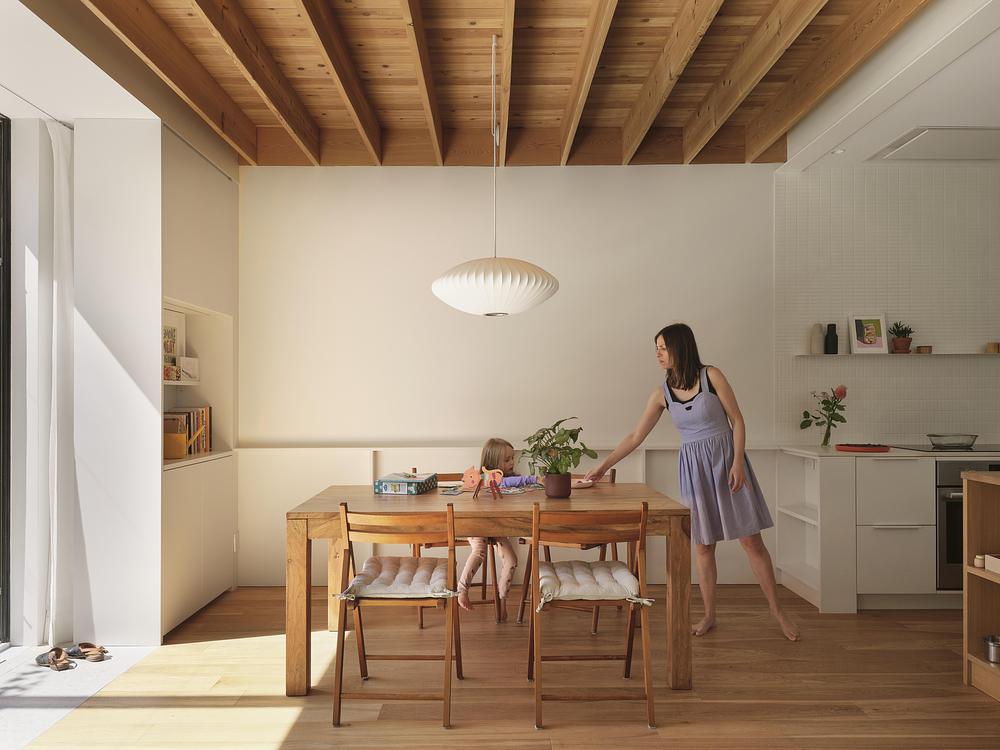
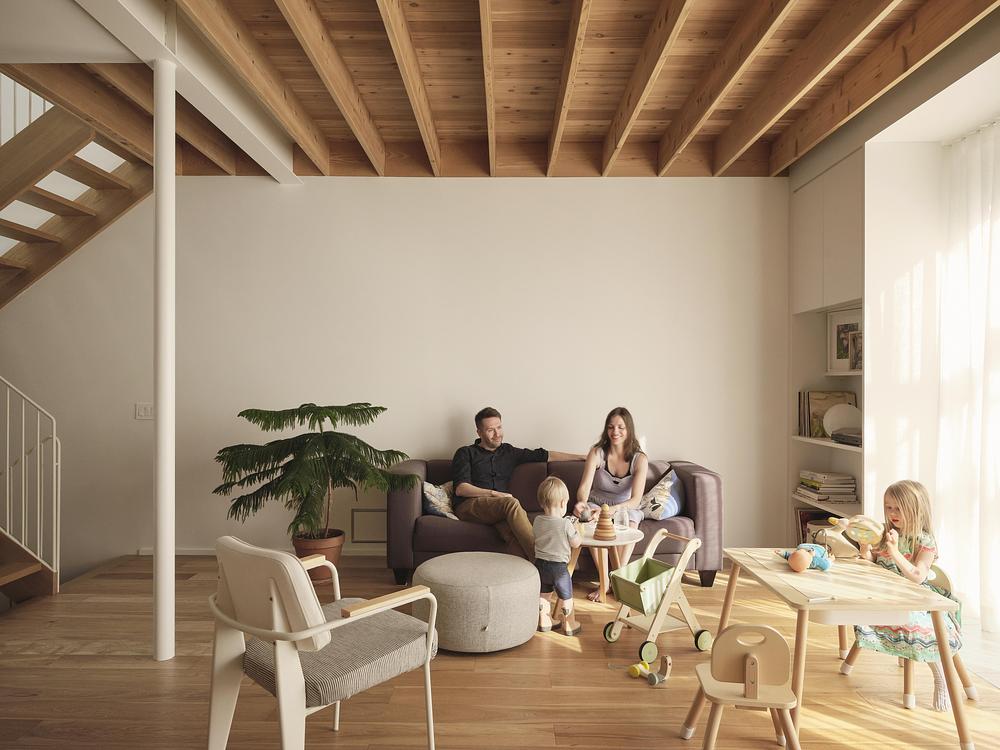
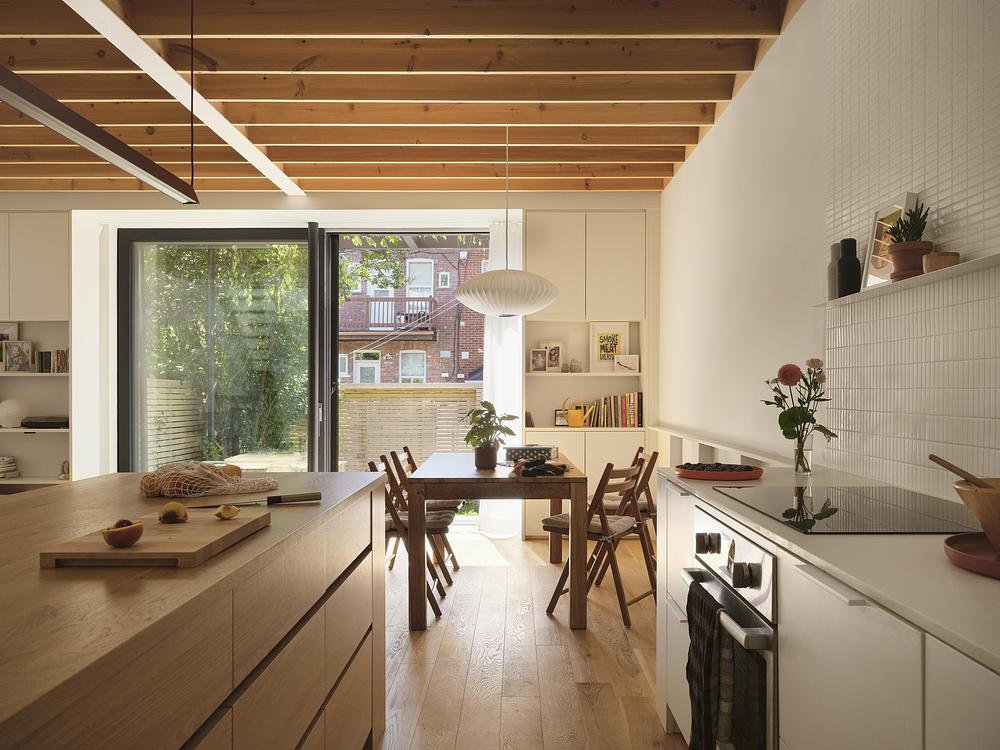
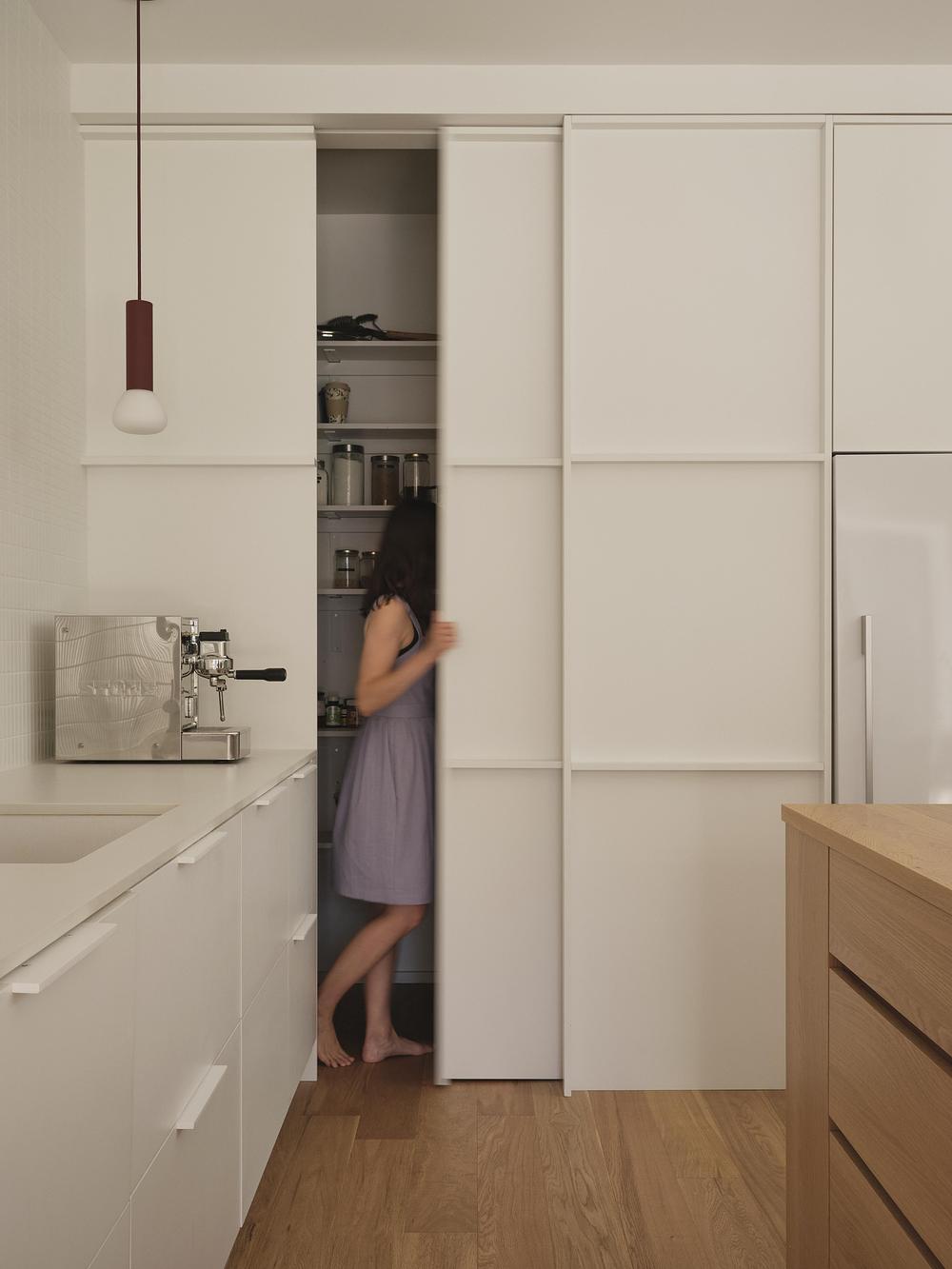
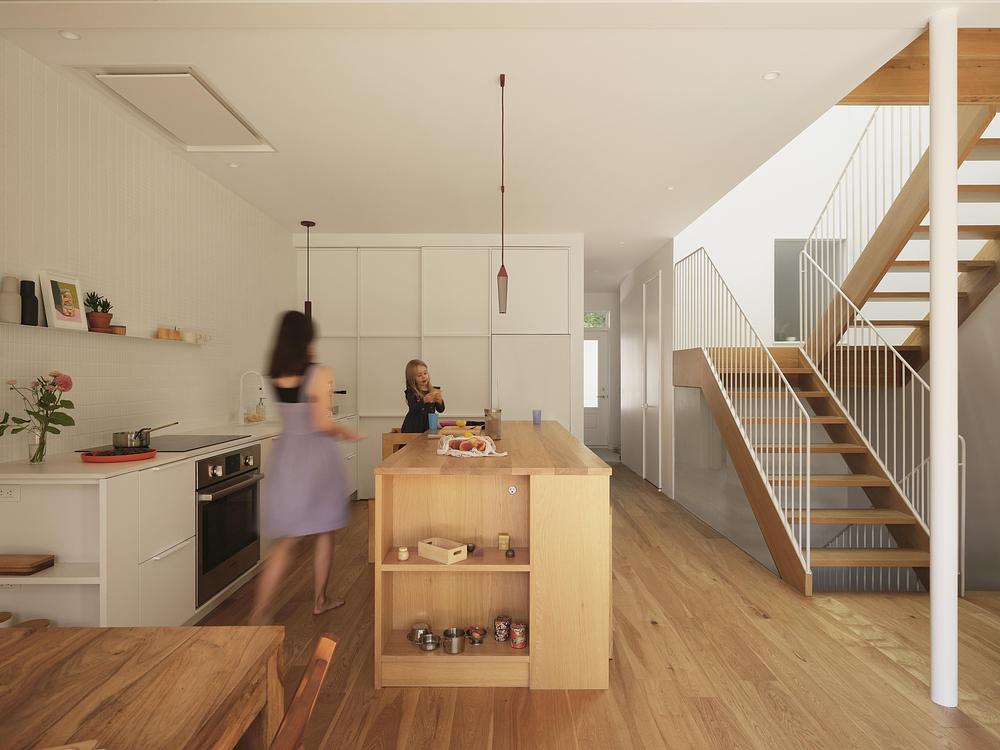
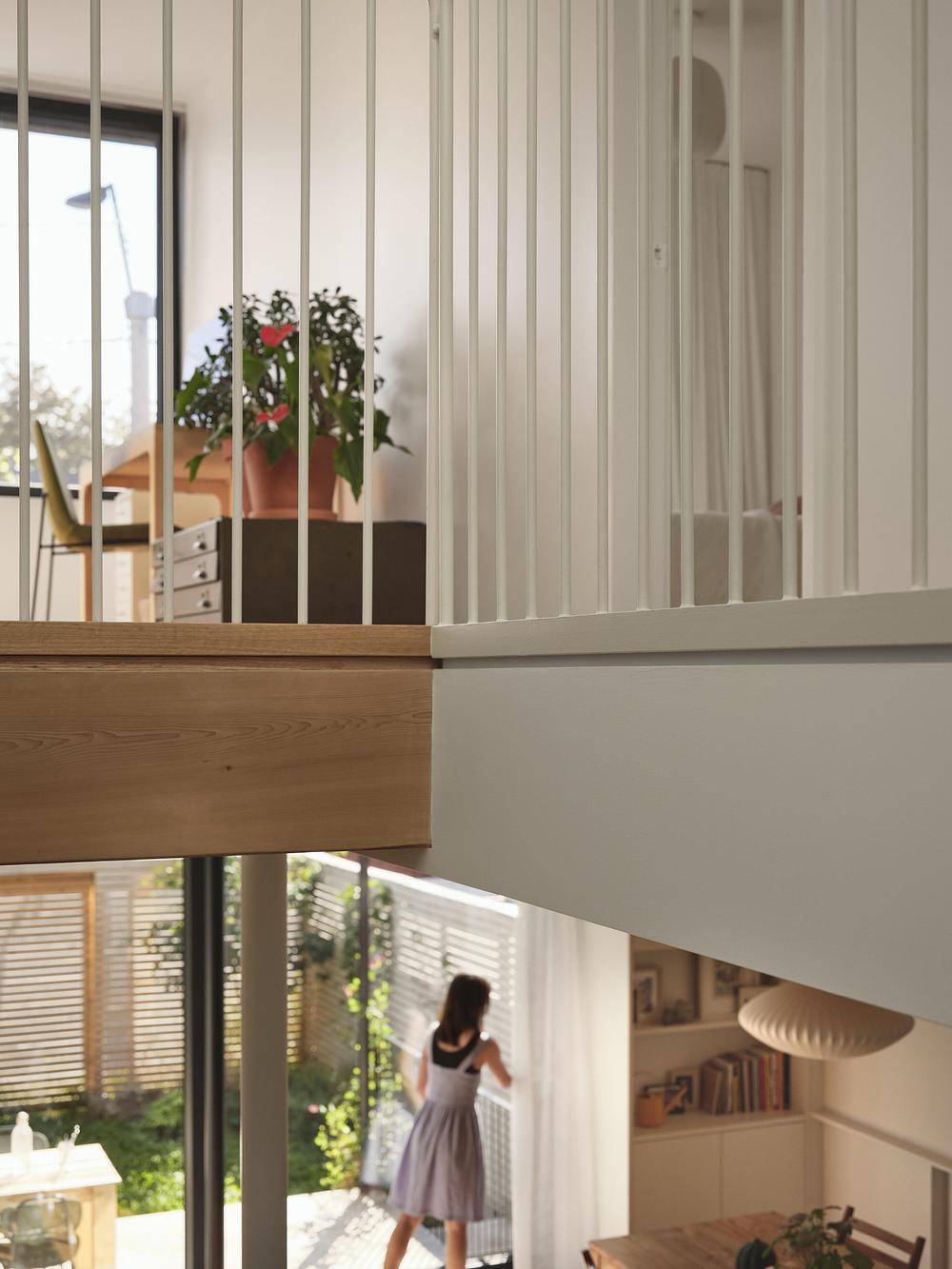
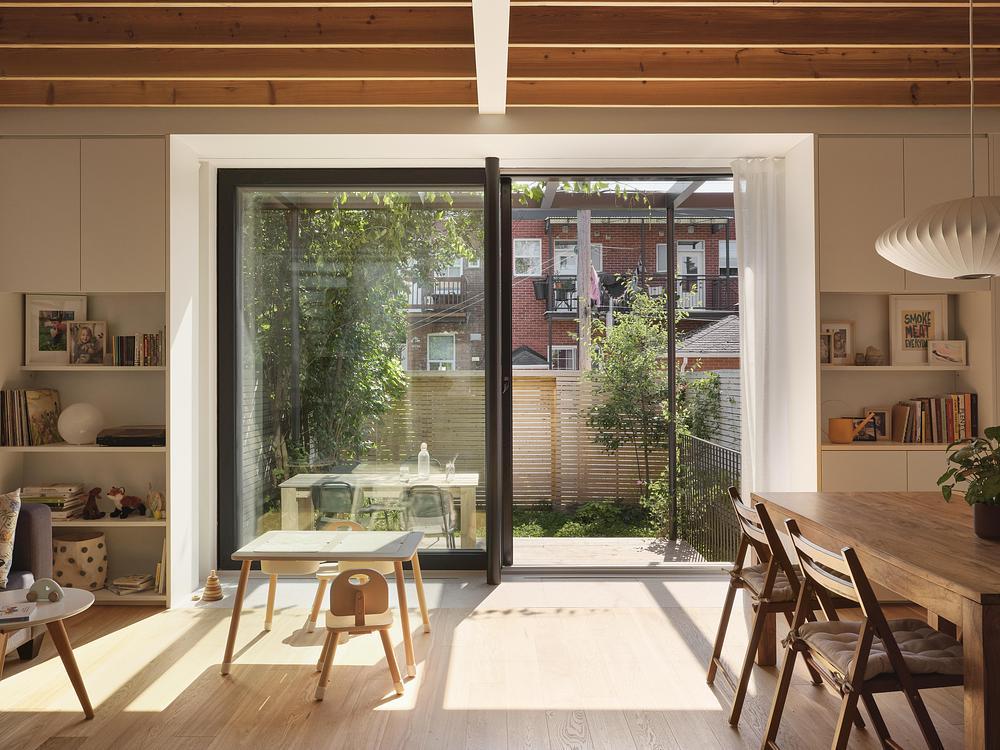
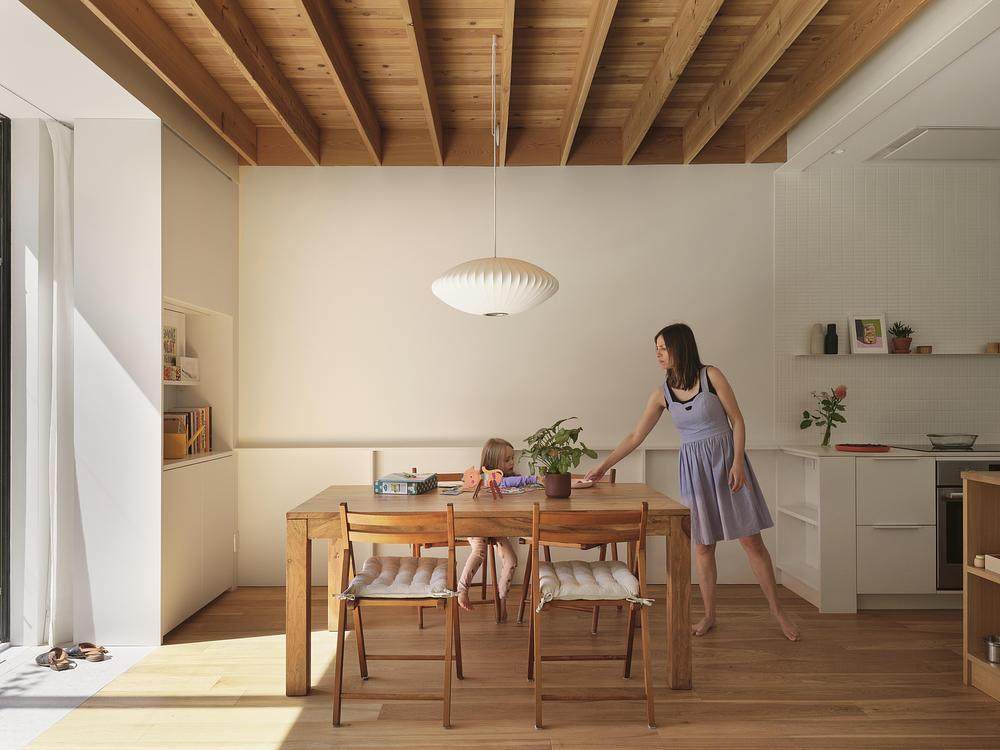
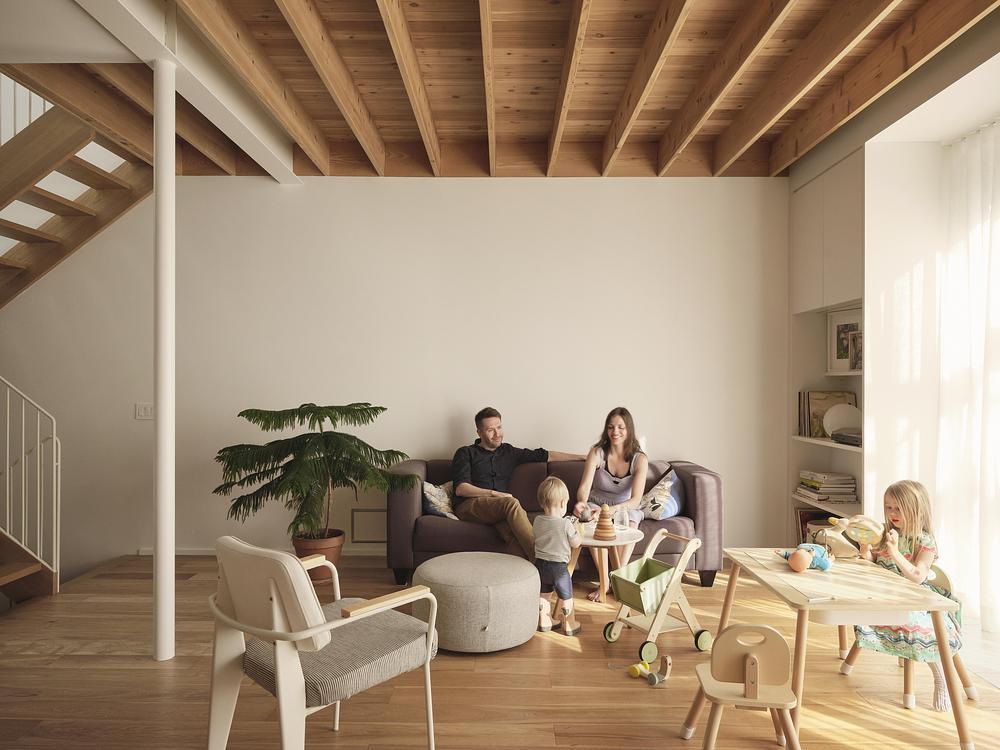
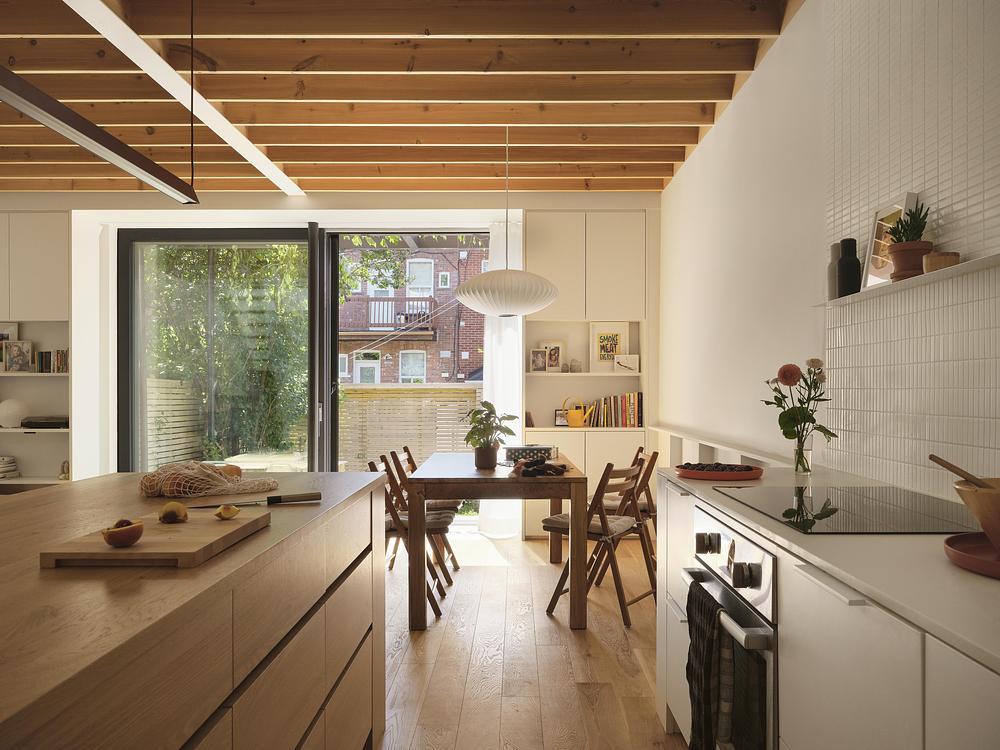
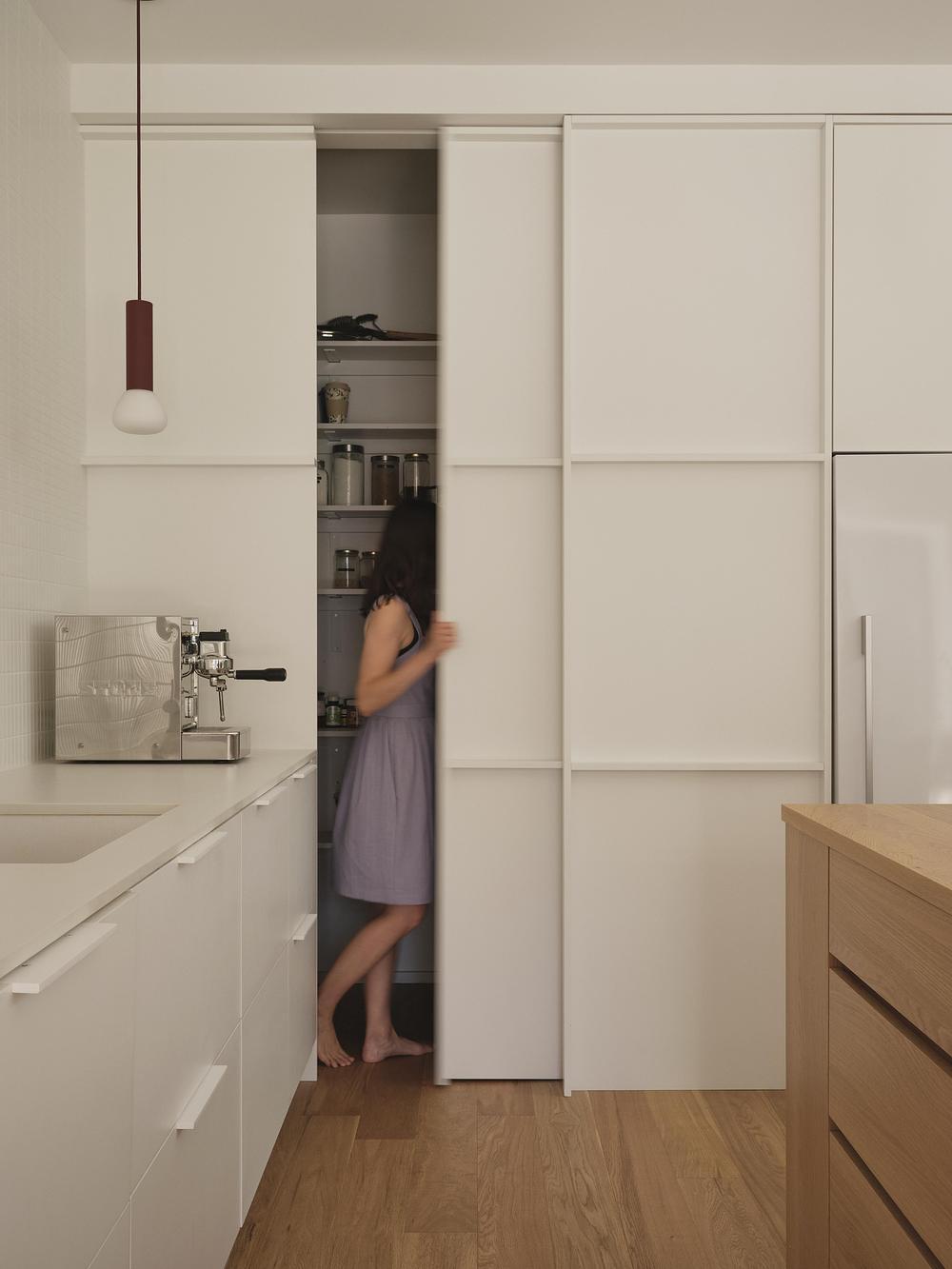
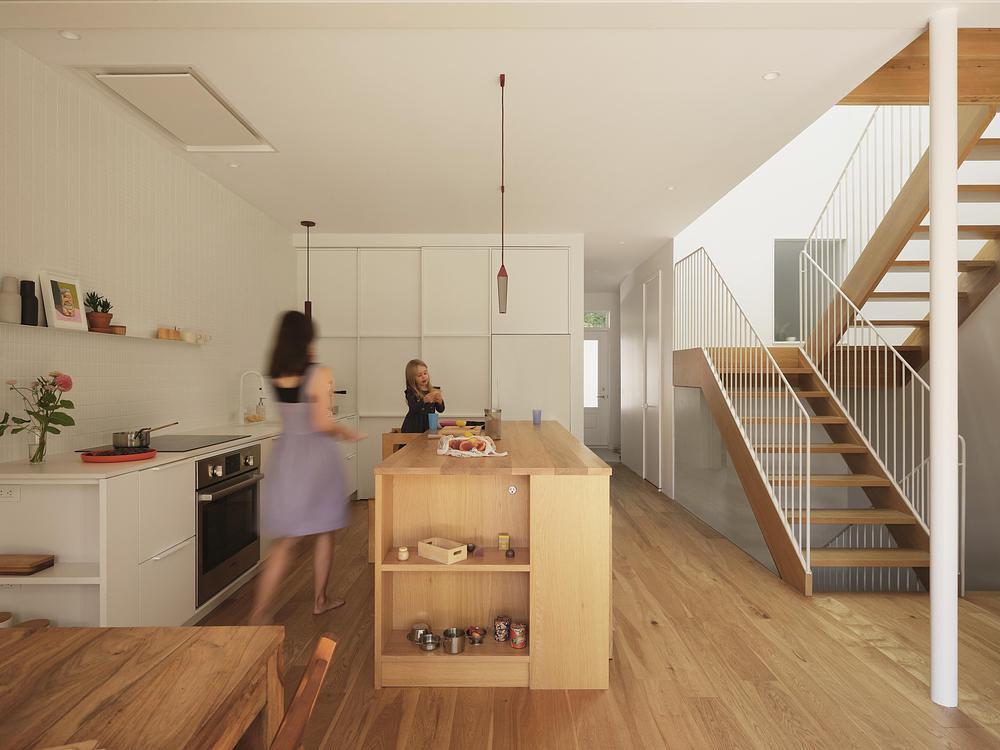
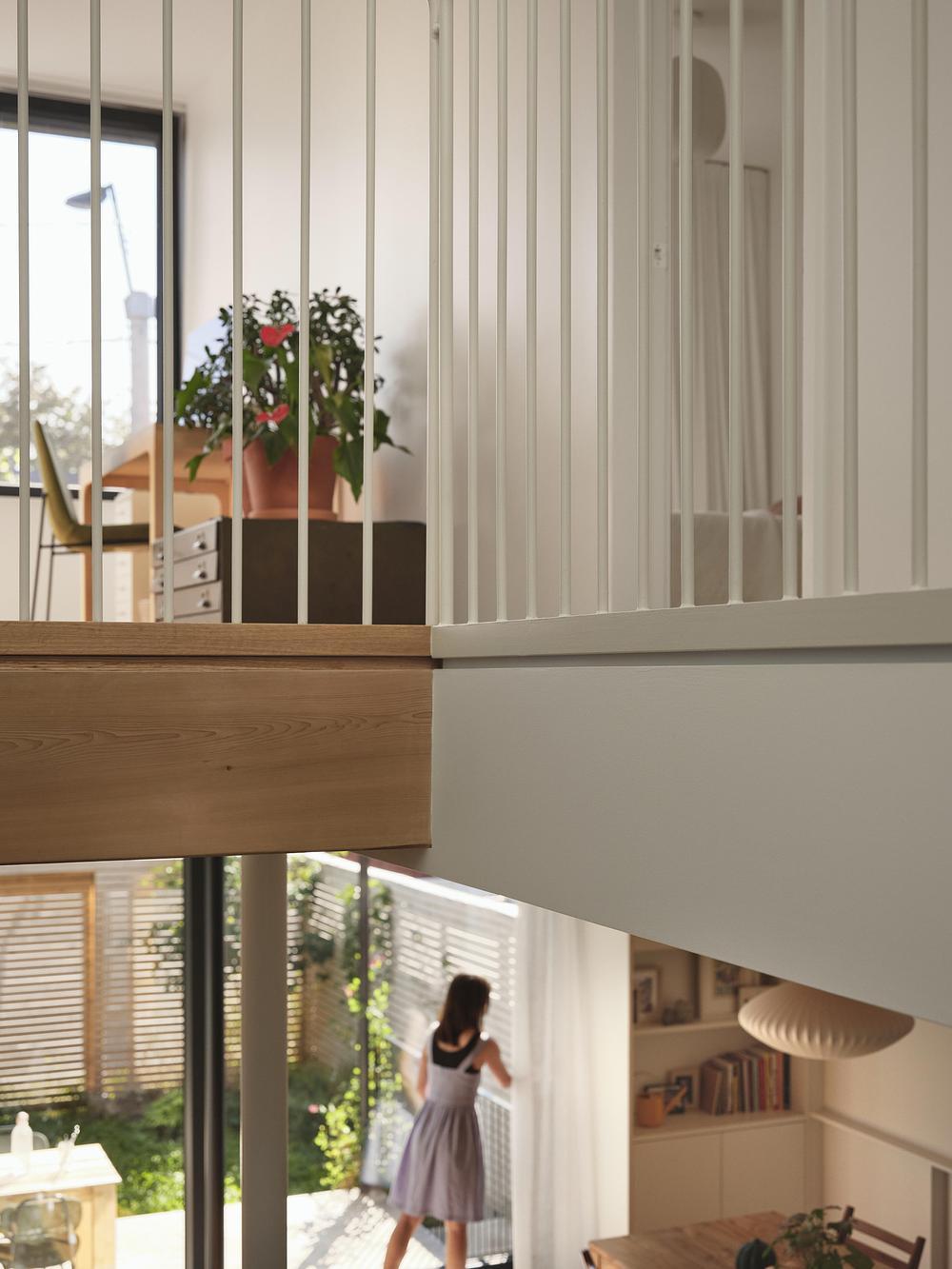
On the ground floor, the space is organized into three successive zones. At the front, a functional zone brings together the entry, a closed office, and a powder room. In the center, the minimalist kitchen acts as a white canvas, punctuated by a large island and a staircase, both crafted in white oak. At the rear, the living and dining areas open generously onto the courtyard through a large glazed opening, beneath a ceiling with exposed cedar joists and decking.
Careful coordination of mechanical systems and structure further enhances the sense of openness: ventilation ducts and the kitchen hood are integrated within the depth of the ceiling joists to preserve the original ceiling height, while a system of steel beams transfers structural loads and clears circulation paths.
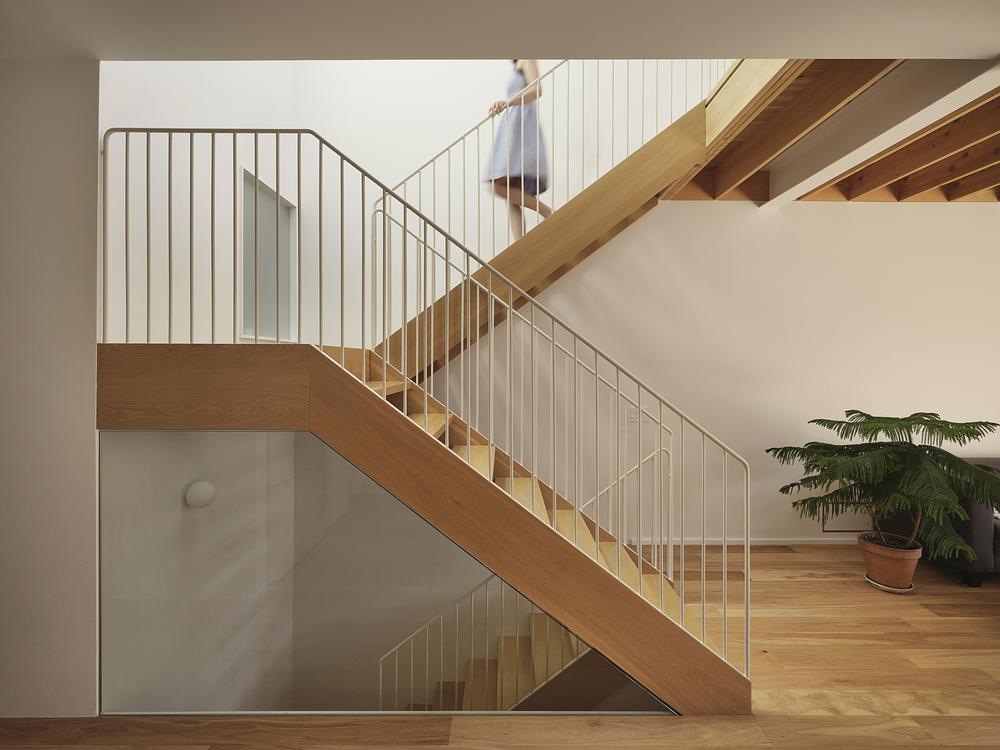
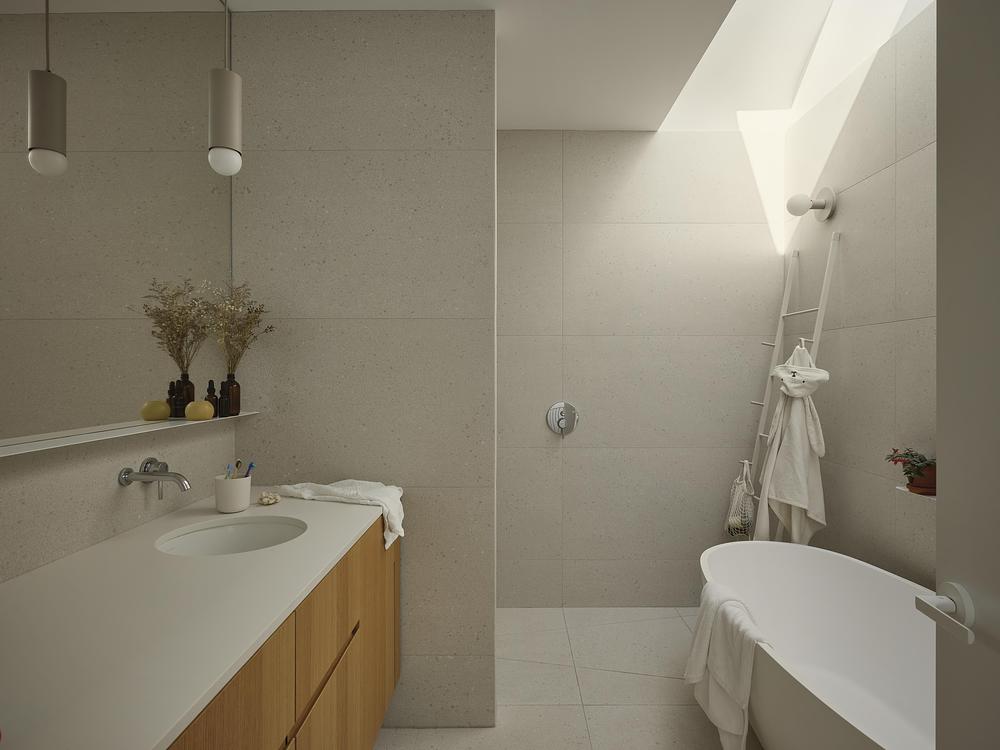
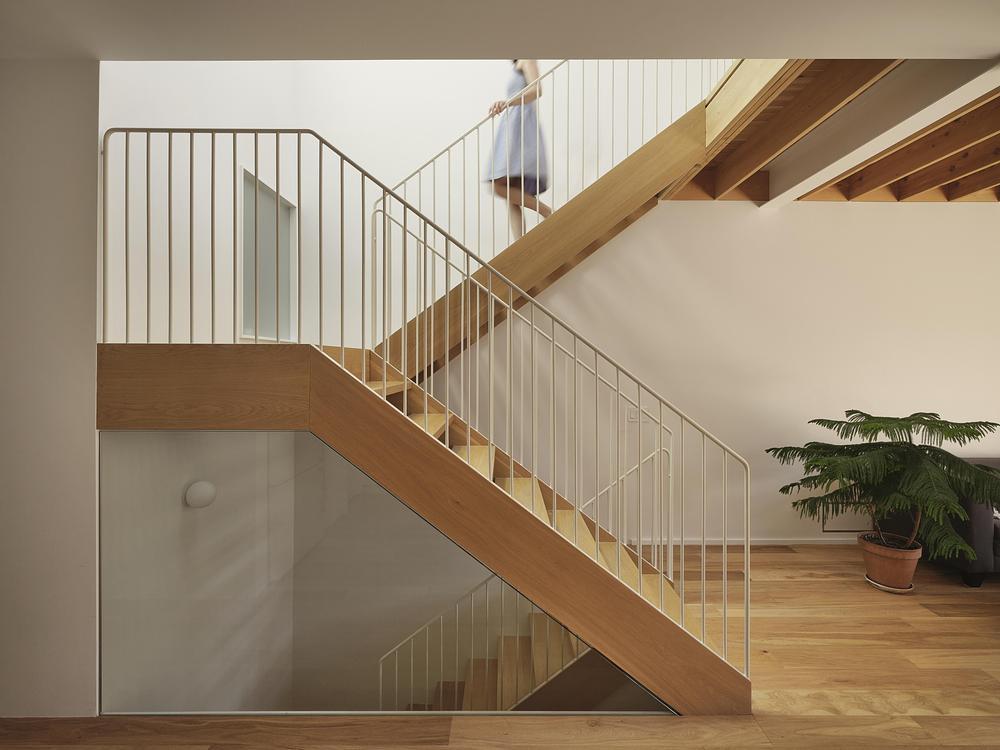
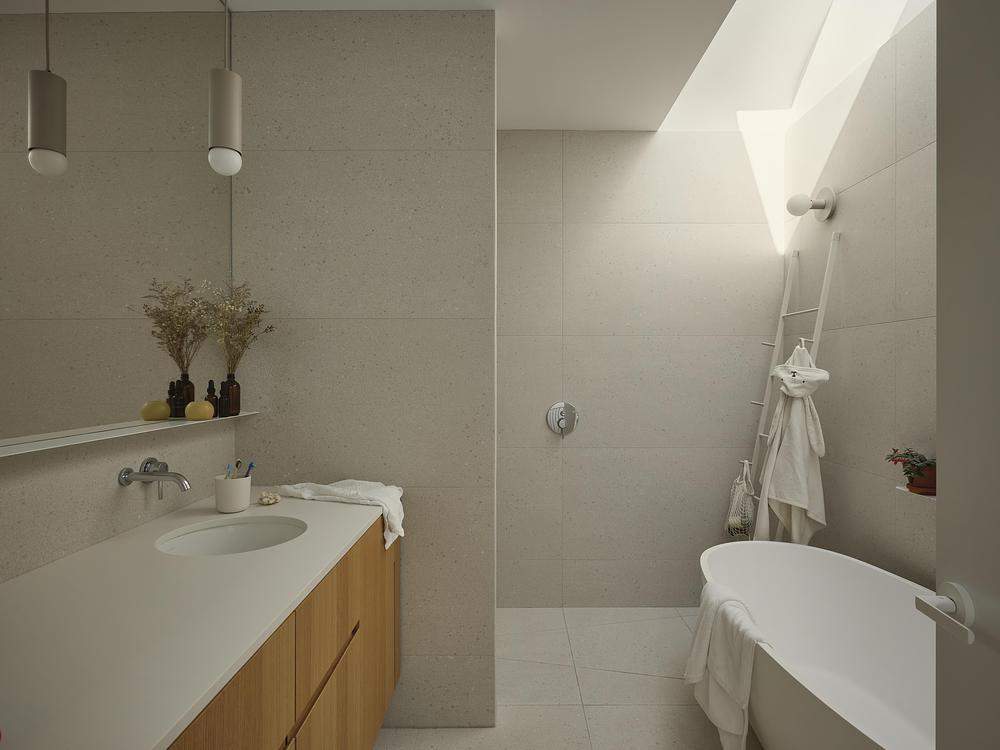
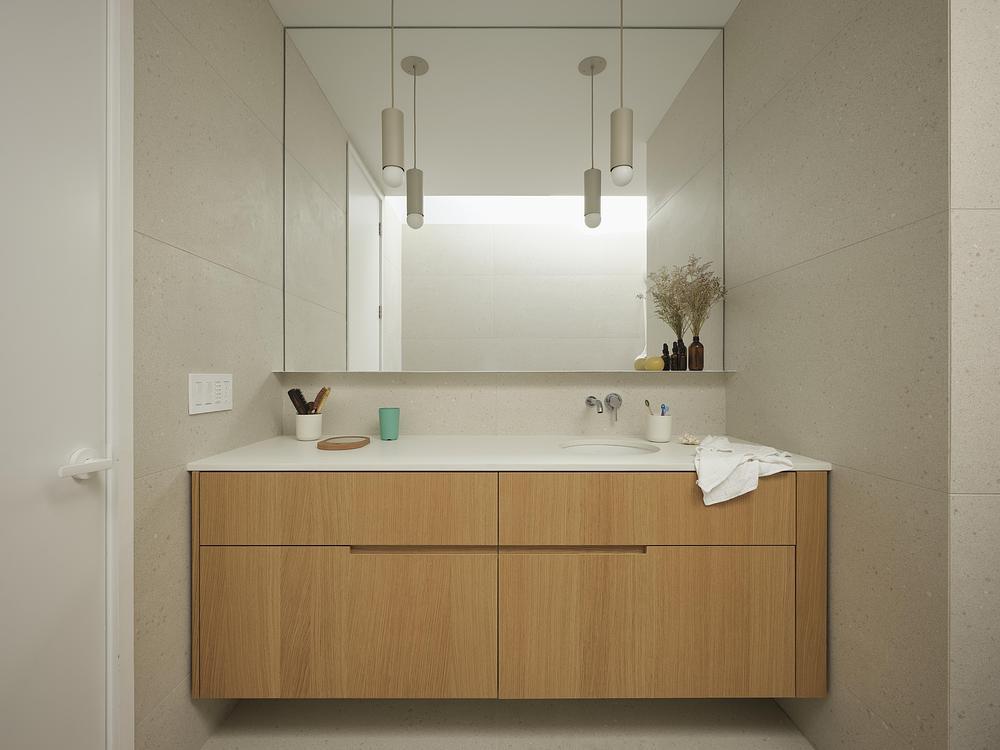
The central staircase, a true centerpiece of the project, is crowned by a skylight flanked by a striking curve which diffuses natural light down to the basement. As a result, every room benefits from natural light, including the ground-floor powder room, whose shower is illuminated by a frosted window overlooking the staircase. Upstairs, the bathroom features a skylight whose curves echo those of the staircase, lending softness and comfort to the space.
The Lilac House places sustainability at the core of its design ethos, both by preserving or restoring certain elements, and by considering the building’s long-term maintenance.
The front balconies have been restored in white cedar, with new ornamental steel columns inspired by the original local typology.
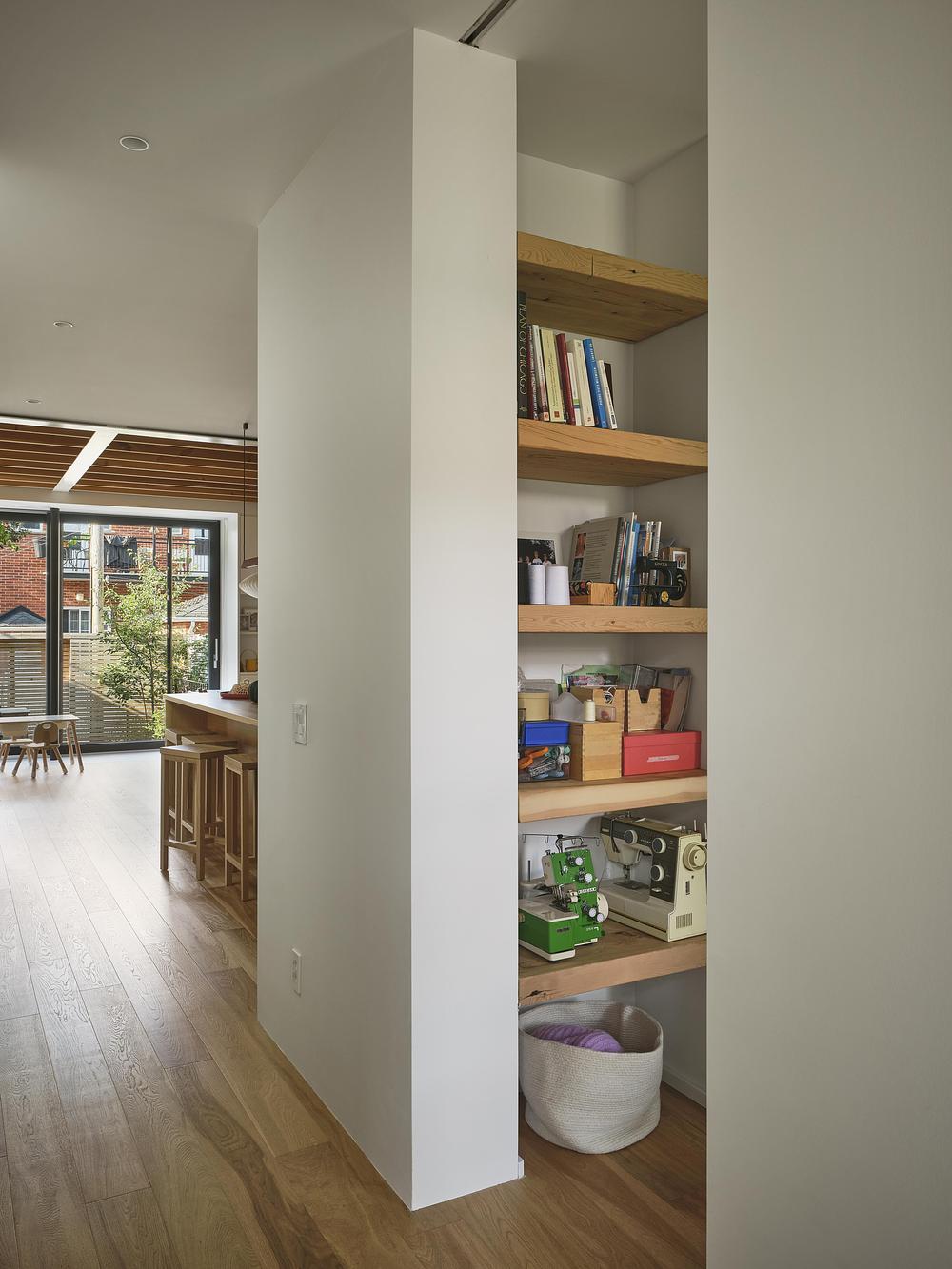
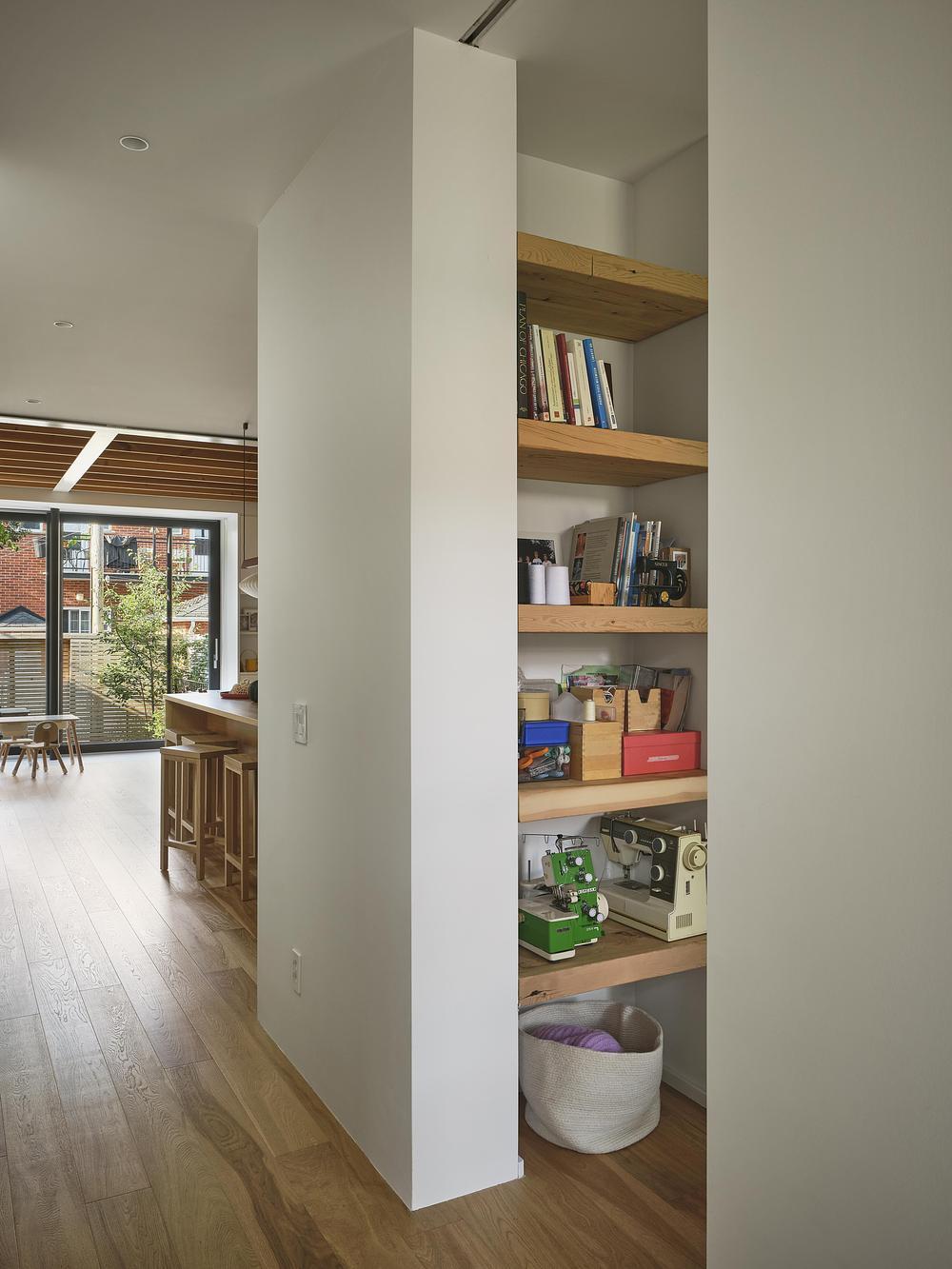
Significant efforts have also been made to preserve and enhance as many original building elements as possible: the brick from the rear façade was carefully dismantled, cleaned, and reinstalled; portions of the existing timbers were sanded and cut down to create shelving in the ground-floor office; and the sole original interior door from the duplex was preserved and relocated to one of the children’s bedrooms.
The new floors, staircase, and millwork are made from local materials and crafted by regional artisans, as were several light fixtures, including those from Lambert et fils and Luminaires Authentik.
Overall, the project favours robust, easily repairable solutions that respect the building’s life cycle, where each decision contributes to reducing the project’s environmental footprint.
Project notes
Area: 850 square feet per floor
Architecture/Design: Claudia Campeau, architect — assemblage studio
Project Team
Structural engineering: Alain Mousseau of Calculatec
Kitchen co-design: Louis-Philippe Pratte and Émilie Gonnot of À Hauteur d’homme
Construction: General contractor: Construction Libersan
Millwork & Cabinetry
Kitchen and living room shelving: À Hauteur d’homme
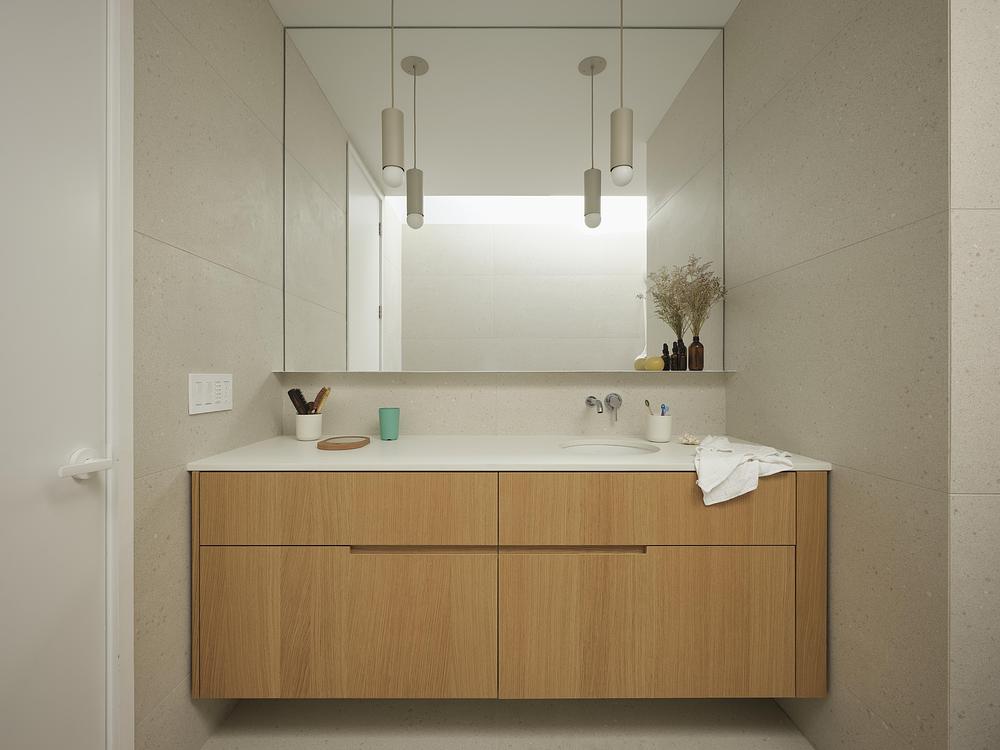
Bathroom vanities: Clef de voûte
Windows & Doors
Rear façade: NZP Fenestration (PassivHouse)
Front façade: Pella
Lighting
Lambert & Fils
Luminaires Authentik
Materials & Finishes
Brushed white oak engineered flooring: Bellefeuille
White oak staircase: Bellefeuille
Powder room vanity countertop: Béton Johnstone
Powder room wall tile: Pixel 41, Almond — Ramacieri Soligo
Powder room floor tile: Ceppo di Gré, Grey — Ramacieri Soligo
Second-floor bathroom tile: Overcome, White — Ramacieri Soligo
Kitchen and second-floor bathroom countertops: Inalco porcelain — Italbec
Built-in range hood: Aroua Tek
















Have something to say? Share your thoughts with us in the comments below.