

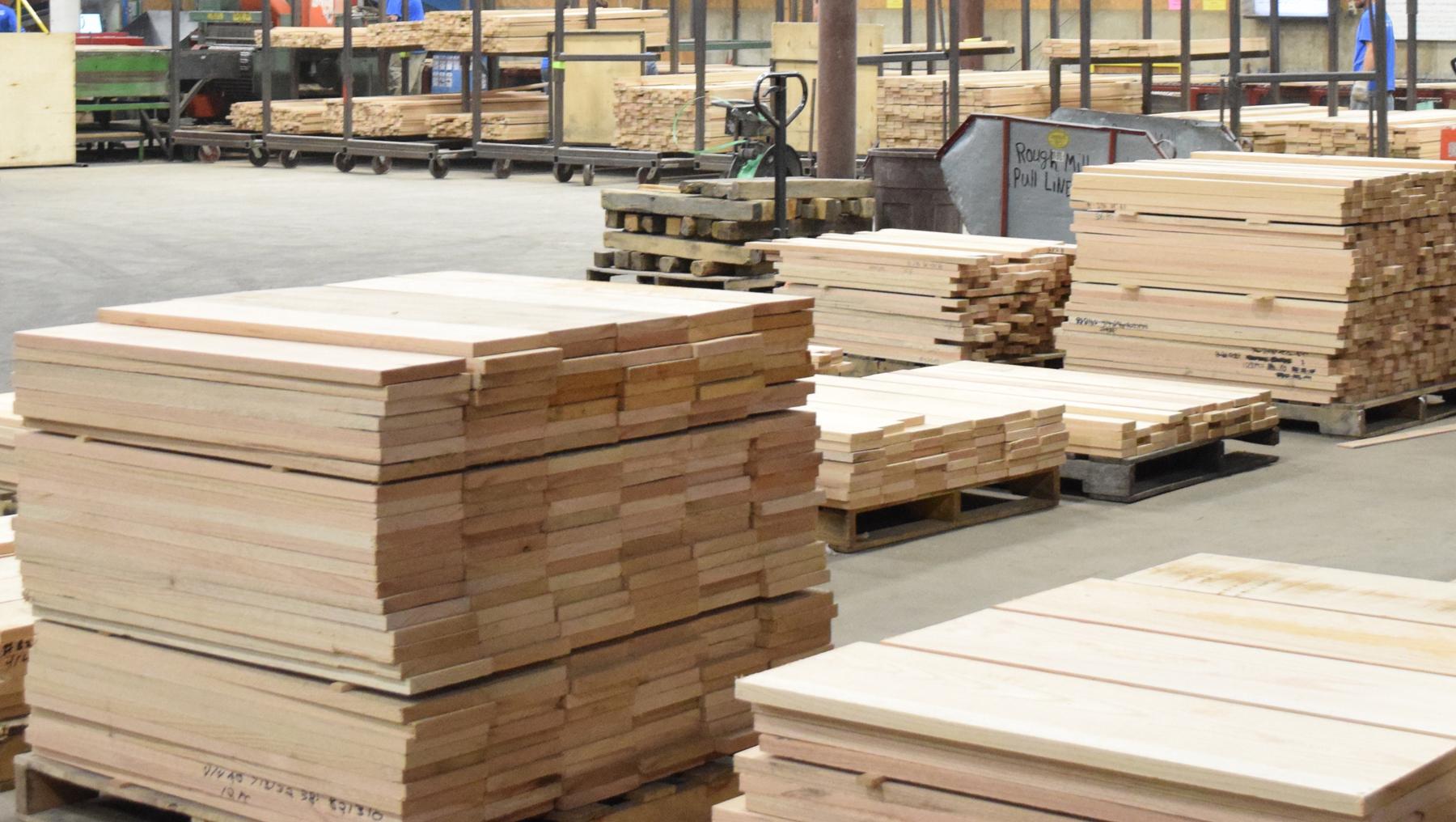
Double surface planers are utilized in various woodworking applications, including the dimensioning of lumber, construction, furniture, and flooring production, to produce boards that are uniform in thickness, precisely surfaced, and parallel.
The machine creates smooth and parallel surfaces on both sides of a workpiece by passing the material through two horizontal cutterheads, each dedicated to the top and bottom surfaces. This removes excess material and provides a uniform thickness to the wood. Their adjustable settings also allow for precise control of the material’s thickness, accommodating various project requirements. Efficient feed systems move workpieces smoothly through the machine, ensuring consistent results, while integrated dust collection systems keep the workspace clean and reduce airborne particles.
Benefits of these machines include:
Precision: These machines provide consistent, precise thicknesses, minimizing material waste and the need for additional finishing work.
Time efficiency: Double surface planers streamline the dimensioning process, reducing labor hours and production time.
Quality control: Woodworkers can achieve higher quality and uniformity in their products, enhancing the final appearance and performance.
Understanding the key features, applications, benefits, and considerations in selecting the right model is essential for optimizing woodworking processes
Choosing the right double surface planer
Selecting the appropriate double surface planer depends on specific project requirements:
Material size: Ensure the machine’s capacity accommodates the dimensions of the materials you typically work with.
Feed speed: Evaluate the feed speed, as this impacts production efficiency.
Adjustment precision: Choose a model with accurate thickness adjustment mechanisms for precise control.
Its role in optimizing woodworking efficiency and achieving material uniformity makes the double surface planer an indispensable asset in the industry, enhancing the quality and appearance of the final products.
Source: Centex Automation. For more information call 210-215-0701 or visit CentexAutomation.net.


Have something to say? Share your thoughts with us in the comments below.