

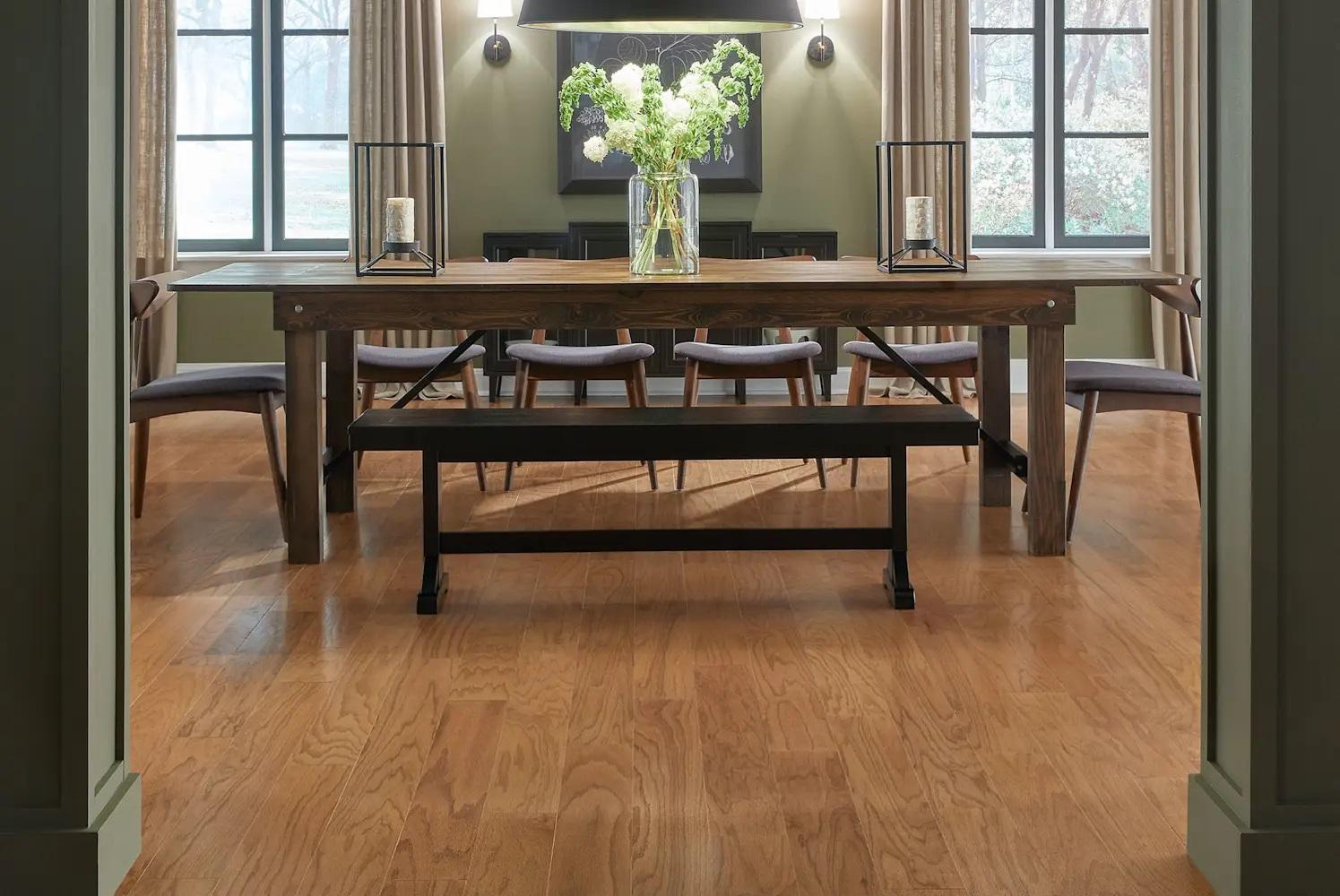
USDA Forest Products Laboratory's life-cycle assessment of prefinished engineered wood flooring manufactured in the eastern U.S. found that the flooring can be considered a carbon-negative material that stores carbon for decades and can help mitigate climate change.
In a study sponsored by the Decorative Hardwoods Association, the laboratory conducted a cradle-to-grave life-cycle assessment of engineered wood flooring manufactured in the eastern United States.
Keith Christman, executive director of the DHA, called it a "win for our industry and the environment." The study, he said, showed that engineered wood flooring stores carbon (22.85 kg CO2eq/m2 flooring, (carbon dioxide equivalent)) for decades and thus "can help to mitigate climate change."
According to the study, among all stages of the flooring's lifecycle, the "use stage" and to a lesser extent, the "product manufacturing module" dominated the total cradle-to-grave environmental impacts of engineered wood flooring
The cradle-to-grave life-cycle impact assessments (LCIA) results showed that 39.3kg CO2eq were released during the lifecycle of 1 m2 of engineered wood flooring. Considering biogenic carbon admissions (i.e. carbon sequestration), the net global warming potential impact was decreased to 16.4 kg CO2eq because carbon is stored in the landfill (82% of total waste disposed of in the landfill), Each square meter of engineered wood flooring consumed 840.2 megajoules of energy, and about 25.5% of the total primary energy used came from renewables, specifically on-site woody biomass. This study showed that engineered wood flooring can be considered a carbon-negative material that stores carbon (22.85kg co2eq/m2 flooring) for decades and thus can help to mitigate climate change.
The cradle-to-grave life-cycle impact assessments (LCIA) results showed that 39.3kg CO2eq were released during the lifecycle of 1 m2 of engineered wood flooring. Considering biogenic carbon admissions (i.e. carbon sequestration), the net global warming potential impact was decreased to 16.4 kg CO2eq because carbon is stored in the landfill (82% of total waste disposed of in the landfill), Each square meter of engineered wood flooring consumed 840.2 megajoules of energy, and about 25.5% of the total primary energy used came from renewables, specifically on-site woody biomass. This study showed that engineered wood flooring can be considered a carbon-negative material that stores carbon (22.85kg co2eq/m2 flooring) for decades and thus can help to mitigate climate change.
The complete study can be found here.




Have something to say? Share your thoughts with us in the comments below.