

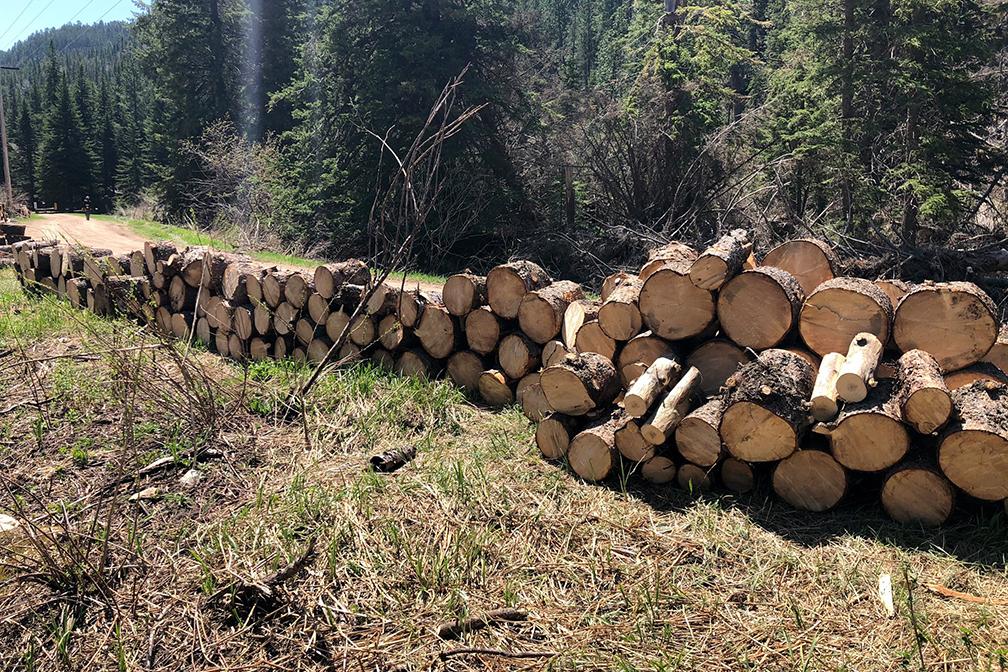
WASHINGTON — Last week, a quartet of U.S. senators sent a letter to U.S. Forest Service Chief Randy Moore demanding steps be taken to open more of the Black Hills National Forest for timber harvesting.
The letter, signed by Sen. Cynthia Lummis (R-WY), Sen. John Barrasso (R-WY), John Thune (R-SD), and Mike Rounds (R-SD), blames forest management policies for reducing the amount of timber available to harvest, leading local sawmills to close.
“Unfortunately, dwindling sawmill capacity near our nation’s national forest is not unique to the Black Hills. Since 2020, more than 20 mills near national forests have been forced to curtail production or close altogether,” the senators wrote. “While the timber industry faces its own unique market pressures, the recent layoffs are a direct result of reductions to the U.S. Forest Service’s timber sale program.”
The senators’ letter was submitted one month after Neiman Enterprises shuttered its sawmill in Spearfish, S.D., resulting in the loss of 50 jobs. Three years earlier, approximately 120 people lost their jobs when Neiman Enterprises closed its sawmill in Hill City, S.D.
In announcing the closing of the Spearfish Forest Products operation, Jim Neiman, president of Nieman Enterprises, said, “We have done everything possible to prevent this unfortunate outcome that will impact these employees, our community, and ultimately the health of the forest. We’ve weathered economic and market downturns over the decades. These layoffs, however, are a direct result of the reduction in the Forest Service timber sale program.”
The senators’ letter noted, “Without a dependable and affordable supply of timber from our national forests, these businesses will not survive. In Fiscal Year (FY) 2024, the Black Hills National Forest timber harvest target sits at 63,000 CCF (one CCF is equal to 100 cubic ceet). This is only half of the 120,000 CCF that the forest was able to cut and sell in FY 2023.”
“If the Spearfish Forest Products facility and the other few remaining mills in the Black Hills region are forced to close, we will reverse years of progress,” the senators further wrote. “Without the forest products sector, forest health will suffer, catastrophic wildfire risk will grow, and damage from insects and diseases will become more likely. The ripple effects from stifling sustainable timber harvests will harm our economy, devalue forest grazing leases, and jeopardize the recreation opportunities we depend on. The forest products industry is hanging on by a thread and continued reductions to the timber sale program cannot continue.”
“For years we’ve heard false promises from the Forest Service. The agency has not expressed interest in attempting to find real solutions to the problems we face in the Black Hills. In September 2023, you encouraged the Black Hills timber industry to invest in new equipment and costly retrofits that could process small diameter trees and other forest residuals – materials that are different from those traditionally harvested and have little to no commercial value. You also suggested that the industry should consider moving away from producing lumber and transition to other by-products that could be used for construction. Aside from the timber transport pilot program, which brought logs by rail from California to the Black Hills, we have seen no efforts to increase timber harvest levels or help the industry.
“The fact is, as verified by your own agency’s data, there is more timber on the Black Hills National Forest than in 1970s and 1980s. The forest can and should immediately increase its timber harvest levels. We should not be relying on the timber industry to reinvent itself and retrofit their facilities when we have access to the very resources they are designed to process. No one is asking the Forest Service to clear cut old growth for timber supply – but we know actively managing our forests, including commercial timber harvests, improves forest health and reduces wildfire risk.”
The letter concludes with a series of questions that the senators expect a response from the Forest Service, including:
- What is the Forest Service doing to increase timber harvest levels on the Black Hills National Forest?
- What are the main drivers of the timber target shortfalls since 2018?
- What resources does the agency need to increase timber harvest levels on the Black Hills National Forest?
- If the agency needs additional funding, please provide a specific amount and breakdown of how it will be used to increase timber harvest levels above 63,000 CCF.
- How many years will it take for the agency to ramp up to harvest levels to meet the collaboratively identified 120,000 CCF target?
Will the agency commit to preventing further economic harm to the forest products industry by providing a consistent supply of timber?


Have something to say? Share your thoughts with us in the comments below.