

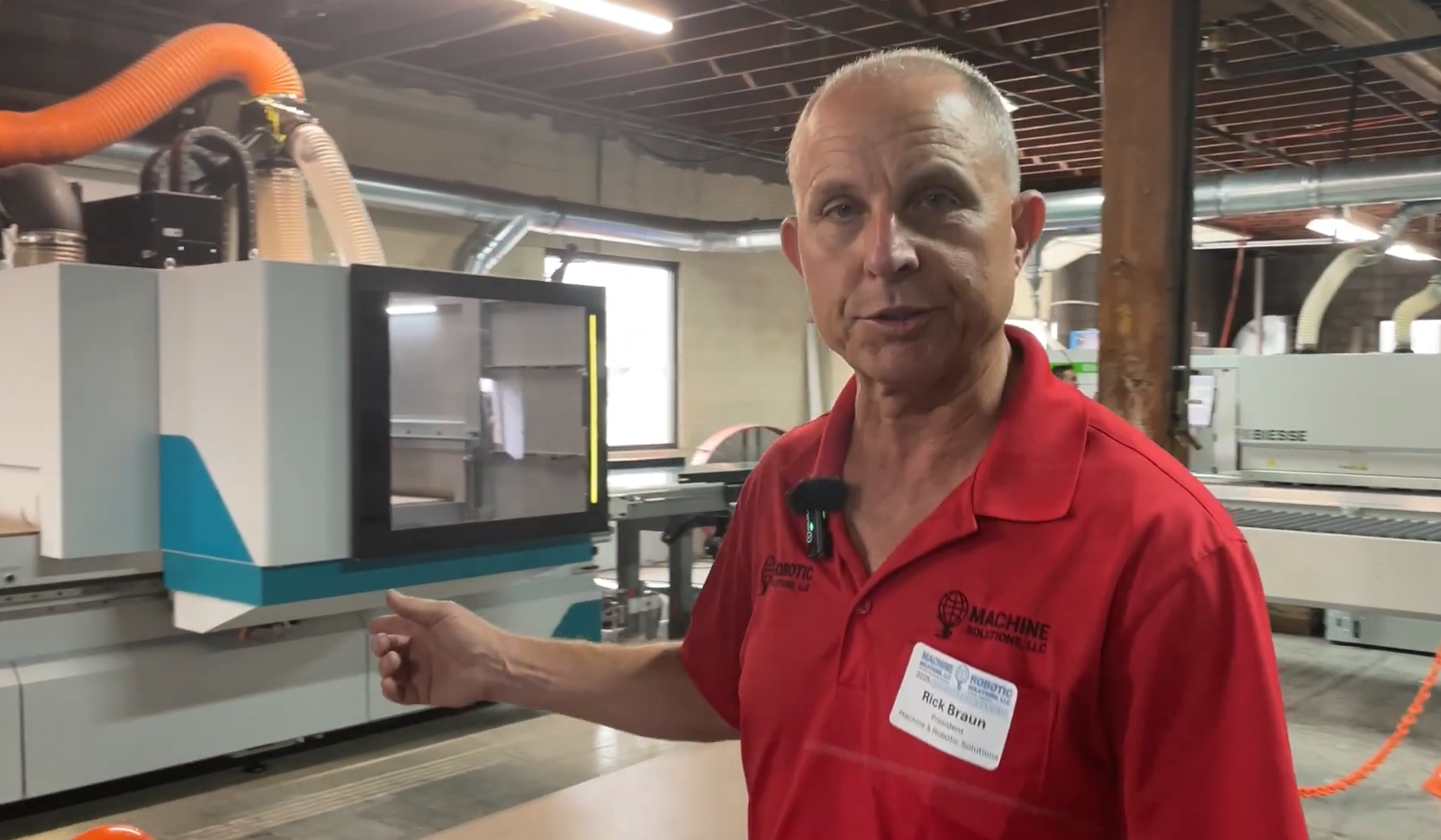
JASPER, Ind. — More than 200 people attended the 2025 Automation Review hosted by Machine Solutions, and, sister company, Robotics Solutions, at the company's Jasper Tech Center.
The annual event, held this year from Sept. 24 – 25, showcased a large array of finishing, wood processing, and material handling solutions, and also included educational presentations, the opportunity to network with automation machinery experts from a spectrum of equipment suppliers, and live machine and robot demonstrations. In one workcell, cabinet components were machined and later assembled on-site.
“This is Machine and Robotic Solutions' 10th anniversary automation review event,” said Rick Braun, president of the two solution provider companies. “We started the Machine Solutions company in 2010, and we began these open house events in 2015. In 2017, because of the demand of our good customers, we started Robotic Solutions for machine tending and finishing applications. Now, here in 2025, you're going to get to see today what we've grown into here in Jasper, Indiana.”
Join Braun as he provides Woodworking Network with an exclusive tour of the event.
The tour began at the company's robotic prototyping cell featuring a Kuka robot, and wound its way through robot stations, including a 10-foot capacity, six-axis spraying robot.
"This is a system with 3-D scanning technology that scans the part as it goes under the scanner, and autogenerates a program, so nobody writes a program," said Braun. "It is a flexible robot for spraying all different kinds of geometry, which is batch one, where every part may be a different size or different configuration."
From there, the tour took us to a Biesse America workcell that featured four Biesse machines, including the Biesse Rover Multiup router, a 4x8 flat table machine with an automatic sweeping system, an Acron 1300 edgebander with a Taylor automatic return, and drill and dowel machines.
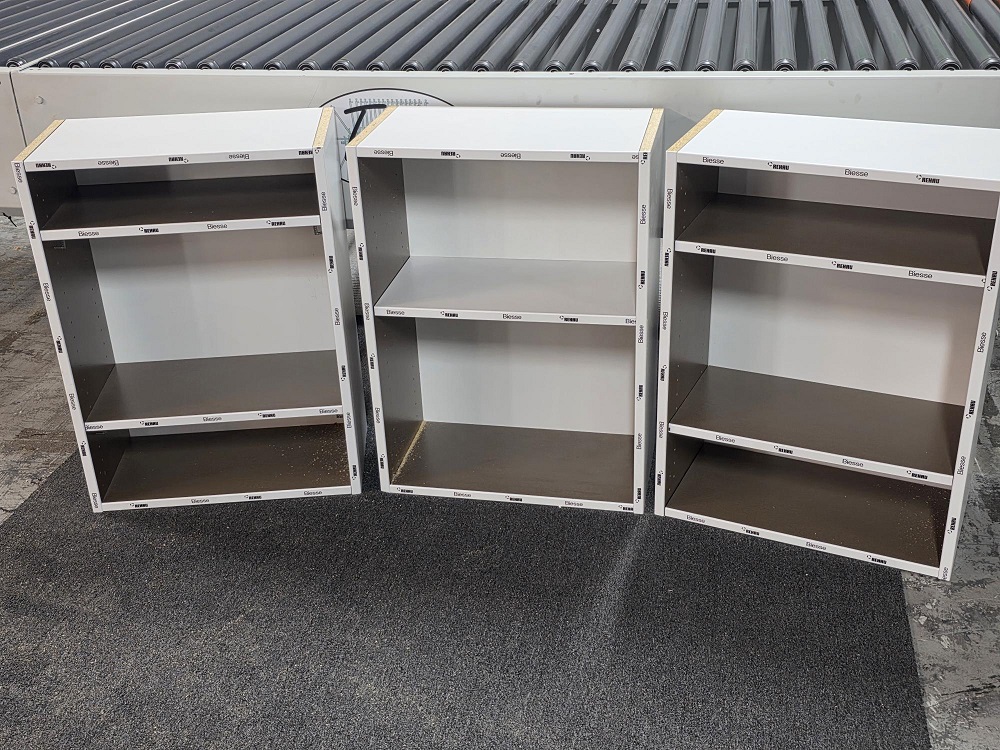
"The significance of this work cell alone is that one person can run this whole cell," Braun added. "We
We are actually going to build cabinets here today, from sheet nesting, to edgebanding to drill and dowel insertion. And, we'll put these cabinets together. All with one person operating the workcell."
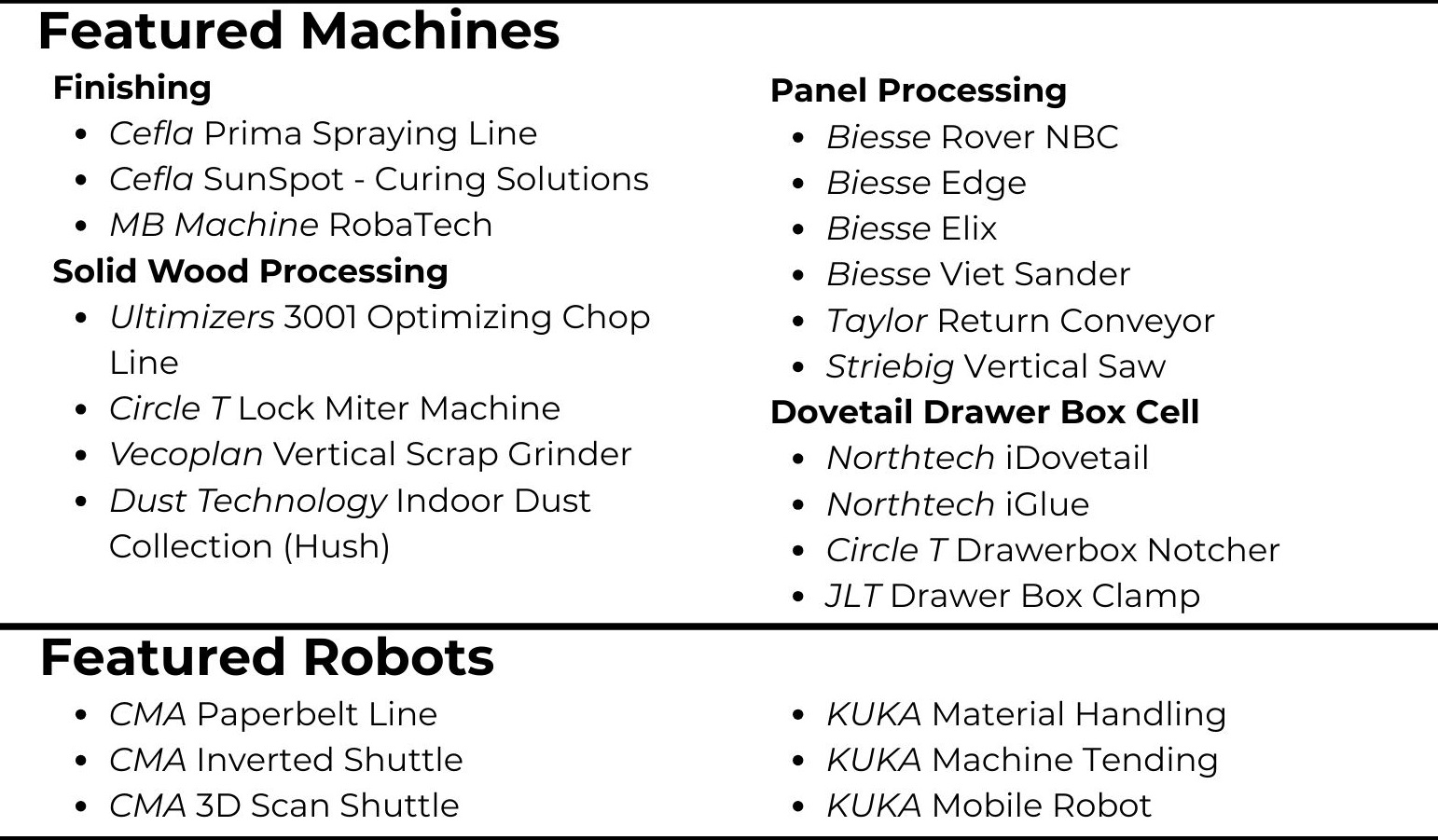
After showcasing drill and dowel machines, gluing machines, notchers, and more, the tour included a look at new Cefla Finishing Technologies, including the Prima EVO 2 spray coater and the FlxDry vertical drying oven using Sunspot technology that cures with infrared light and "cuts drying time down from hours to minutes."
The Sunspot technology was also showcased in Cefla's SunSpot Roadshow Tour bus that made a stop at the Jasper facility. "Sunspot has a portable RV to bring around to events and to customer sites to cure finished goods," said Braun. "In the back of this RV is a test lab ... we got a full curing room. We can bring parts in and show them the Sunspot that can be hung on the wall inside any room in a facility to cure parts evenly and quickly."
Migrating to a second building, the tour next stopped at a large robotic workcell for material handling of entry doors. Next, we looked at CMA robotics for strictly spraying. "This system is the first of its kind in the world. It's called an inverted shuttle for smaller companies that need to hang their parts vertically."
It has two different hangers, so a part can be loaded while the first part is painted. The part is scanned by the CMA to autogenerate the finishing program. "Those dimensions will be sent to the controller, and the robot knows exactly what to do with no human intervention."
The system also has a handheld spray gun that can be used in a prototyping cell for capturing operator movement and generating a finishing path program. "If I had a complicated part, all I would have to do is take a teach pendant and act like I'm going to spray. [Or], you can spray fluid with a booth. So, in a prototyping cell, you can spray a much more complicated three-dimensional part, and all those movements are saved automatically."
And at the end of the tour was a Cameron chop system. "This is a crayon marking belt feed system," said Mark Cutonilli, regional sales manager for James L. Taylor, supplier of the machine. "This machine is going to a customer who's cutting rail door parts. It's one-piece-at-a-time, defecting out any knots or imperfections and going down to a top cutting chopsaw. The part gets excellent cut quality, plus or minus a 64th. What you'll typically see on the out feed is a kicker station sorting line to kick all these different length parts into their respective bins."



Have something to say? Share your thoughts with us in the comments below.