

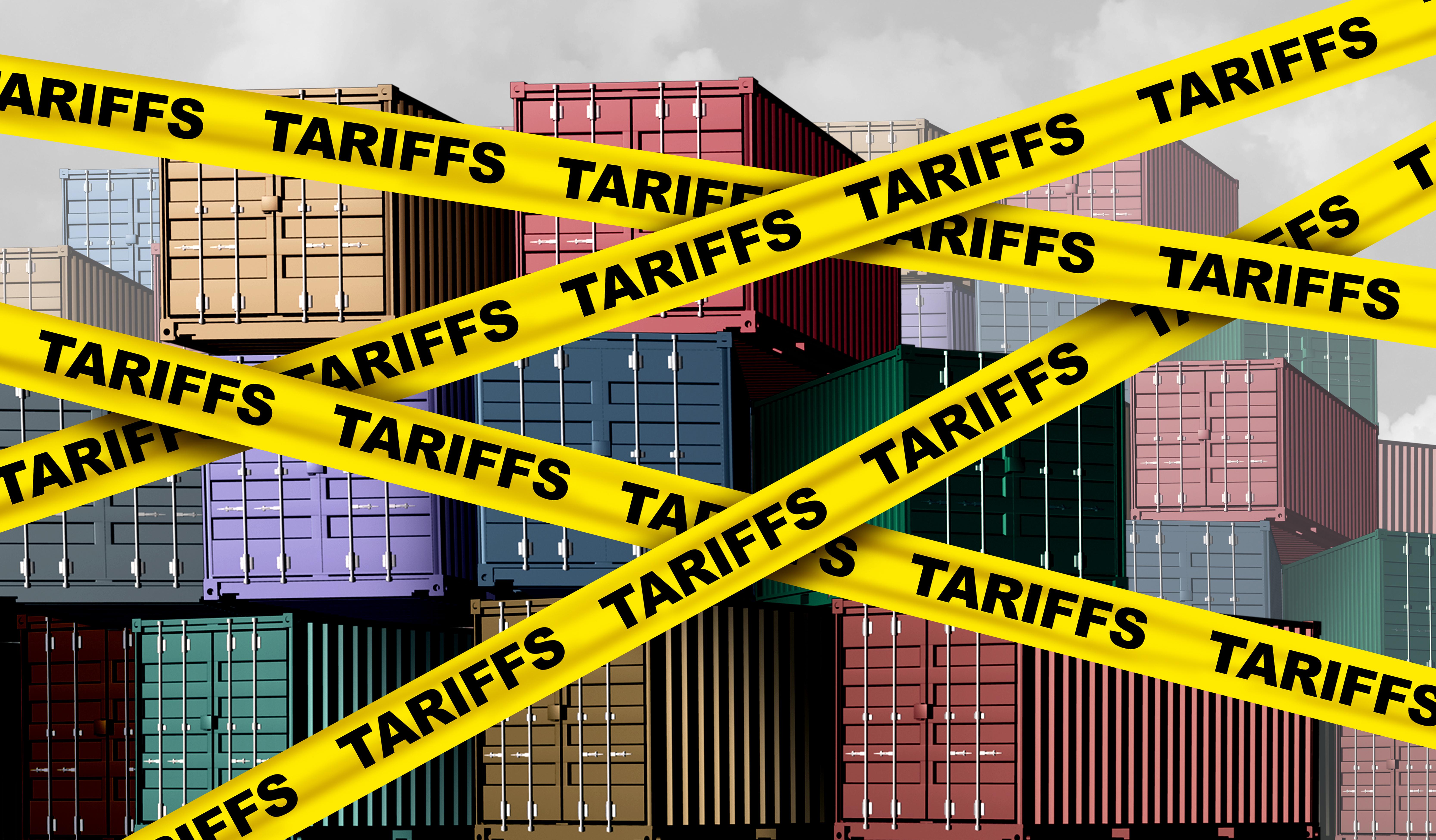
The Supreme Court ruled Friday, February 20, that President Donald Trump does not have the legal authority to impose sweeping global tariffs without congressional approval, upending one of his key policies and issuing a rare constraint on his attempts to expand presidential powers.
In a 6-3 decision, the Supreme Court ruled that the International Emergency Economic Powers Act (“IEEPA”) does not authorize the President to impose tariffs. The court overturned the president's fentanyl related duties on Canada, Mexico, and China. Trump had imposed sweeping reciprocal tariffs after declaring national emergencies relating to narcotics inflows and persistent trade deficits. These measures included duties on imports from Canada, Mexico, and China, as well as baseline tariffs of at least 10 percent on imports from virtually all trading partners, with higher rates for certain countries.
In response, hours after the Court’s decision was released, Trump announced he was imposing 10 percent tariffs — later bumped up to 15% — across-the-board globally to address trade imbalances and exploring additional Section 301 tariffs on countries with unfair trade practices. A 301 tariff is an additional duty imposed by the U.S. Trade Representative (USTR) under Section 301 of the Trade Act of 1974 to counter foreign policies deemed unfair, such as intellectual property theft or discriminatory trade practices.
According to the Kitchen Cabinet Manufacturers Association's statement on the ruling, the decision "significantly narrows the President’s ability to use emergency economic powers. IEEPA can no longer serve as a vehicle for executive tariff action to address trade deficits, import surges, or other declared emergencies."
The ruling does not reverse duties imposed under other statutory authorities. This includes the approximately 35% combined antidumping and countervailing duties on Canadian softwood lumber, the 10% global Section 232 tariff on softwood lumber, and the to the 50% global Section 232 tariff on steel and aluminum imports. In addition to antidumping and countervailing duty laws, Trump still has authority to impose duties on imports including the Section 201 safeguard actions, Section 301 to address unfair trade practices, Section 232 to protect national security, and other tools.
"The bottom line," the KCMA explained, "for the cabinets industry is that the 25-percent Section 232 tariffs are not impacted at all by the Supreme Court's decision and will stay in place. While imports of all other goods from across the world will not only be subject to the 10-percent tariff that President Trump announced today, imports of cabinets, vanities, and parts thereof will still be subject to 25-percent tariffs."
British Columbia Premier David Eby welcomed the news that the US Supreme Court had struck down some of Donald Trump's so-called Liberation Day tariffs saying that it opened the door to more discussion as it relates to Trump’s national security tariffs.
“The national security tariffs that are impacting our lumber and our manufactured wood products like cabinets and countertops,” he said, adding, "I don't think anybody at home thinks that countertops and kitchen cabinets or a national security threat to the united states and in the court today the Supreme Court of the United states said very clearly that they would read carefully the authorities that are given to the president and to Congress in determining whether or not taridds are justified and that careful reading in my opinion would not find that BC wood products are national security threat to the United States.”
He also questioned the idea of imposing "another 10% tariff literally the same day that the Supreme Court of the United states said that these tariffs were illegitimate and invalid is an example of the kind of chaos and disruption that we're seeing in terms of business relationships in the United states right now.”
Jonathan Paine, president, The National Lumber & Building Materials Association, said, “Today’s decision reinforces the importance of clear statutory authority and long-term predictability in trade policy. Lumber and building material dealers operate within a supply chain that depends on stability; sudden shifts in tariff policy impose real costs on dealers, their customers, and the broader residential and commercial construction industry. Trade policy should provide certainty, not volatility. While significant trade measures remain in place, this ruling offers needed clarity and an opportunity to pursue a more durable, transparent approach that supports housing affordability and strengthens domestic supply chains.
NLBMDA will continue to advocate strongly for the exemption of lumber and building materials from existing and future trade actions to help ensure price stability for critical residential and commercial construction inputs. This approach would advance our shared goal of improving housing affordability and creating the conditions necessary to support increased homebuilding and construction activity.”
Bill Owens, chairman of the National Association of Home Builders (NAHB) and a home builder and remodeler from Worthington, Ohio, said the ruling doesn't address the nation's housing affordability issue. "[The] NAHB urges the president to exempt building materials as part of his tariff strategy because they raise construction costs, impede supply chains and result in market and business uncertainty that make it difficult for builders to price their homes. NAHB will continue to work with the administration and Congress to remove regulatory obstacles that hinder the construction of new homes and apartments.”
The National Consumers League (NCL) applauded the decision by the Supreme Court of the United States, calling it a "major victory for American consumers and a rebuke of a costly experiment that functioned as a hidden tax on families.
The following statement is attributable to John Breyault, National Consumers League Vice President of Public Policy, Telecommunications, and Fraud: “For months, shoppers have been forced to shoulder tariff-related junk fees, price hikes, and supply chain disruptions that had little clear economic justification. These tariffs didn’t protect consumers — they punished them. The Court’s ruling should close the door — permanently — on this anti-consumer tariff regime. These tariffs operated as a nationwide price hike affecting everything from household goods to everyday essentials. American families should not be collateral damage in an ideologically driven trade policy.
"The White House should respect both the spirit and the letter of this ruling and refrain from attempting to resurrect these sweeping tariffs under alternative statutory authorities. Repackaging the same policy under a different legal label would only prolong economic uncertainty and continue to squeeze household budgets. At a time when families are struggling with affordability, federal policy should be laser-focused on lowering costs and promoting competition — not reviving broad-based tariffs that act as hidden taxes at the checkout counter.”



Have something to say? Share your thoughts with us in the comments below.