

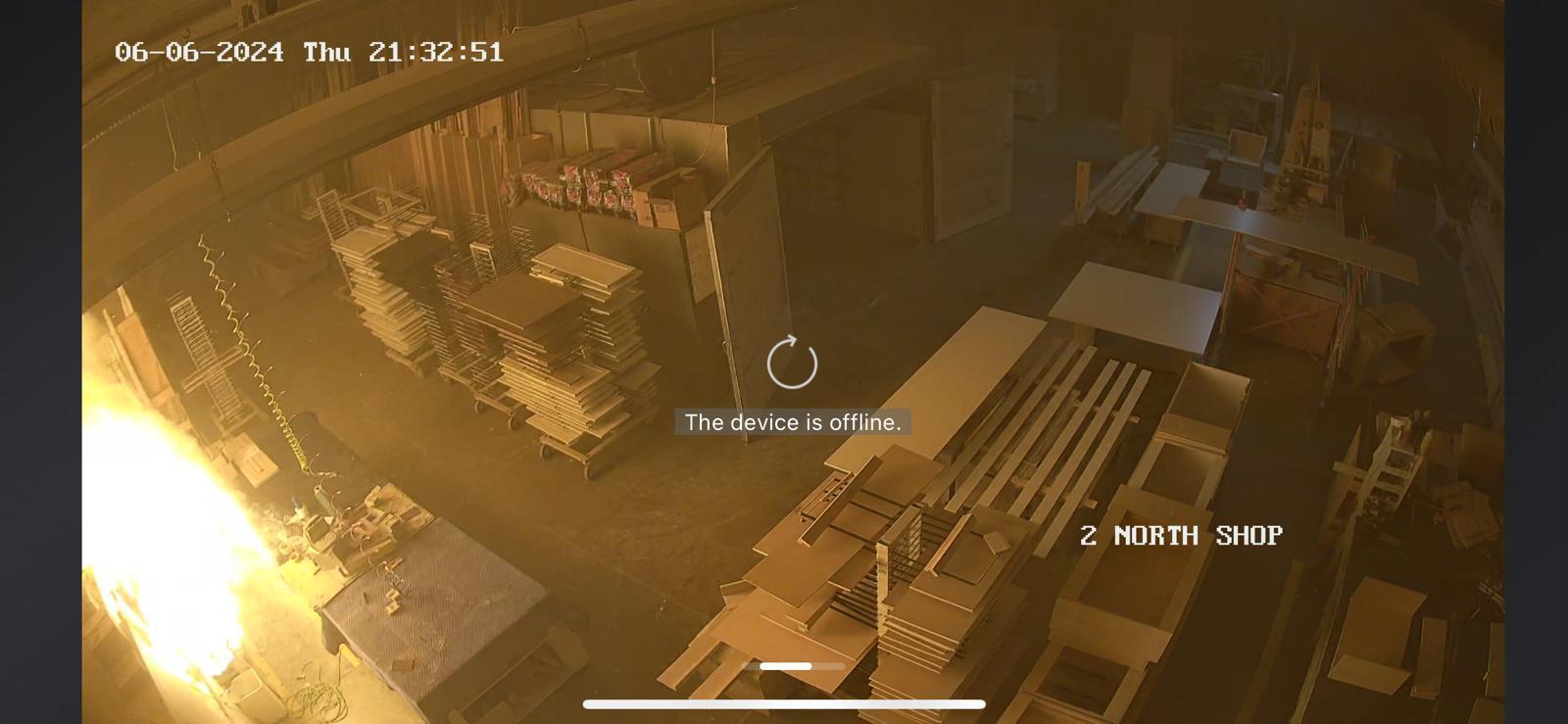
Caught on a security camera, fiery flames emanating from exploding lithium-ion batteries were the first indication of trouble for the owner and manager of Hiebert Cabinets and Woodwork in Bow Island, Alberta, Canada.
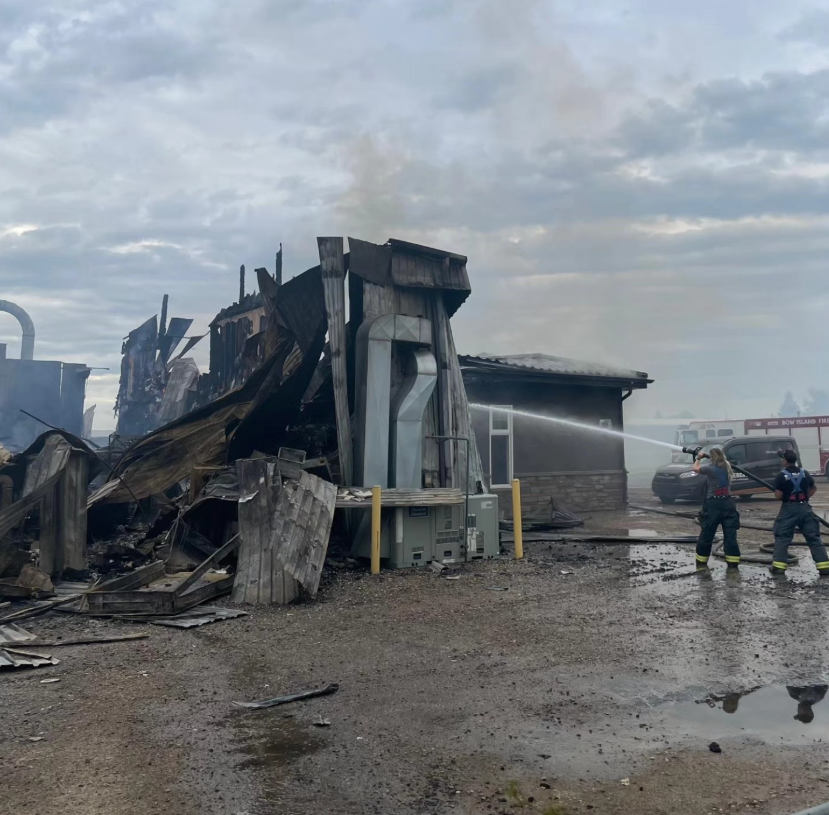
This sudden flash of fire became a massive conflagration that ended a day later with a burnt-out shell and a pile of rubble where a factory once stood.
Company managers were alerted to the fire at about 10 p.m., June 6, 2024. Emergency officials were en route. Owner John Hiebert was soon on his way to assess the situation. It didn’t take long to find out.
“I saw a glow in the sky when I went over some of the hills, you know, 10 kilometers out of Bow Island, and I knew my cabinet shop was gone,” Hiebert said. “I knew that I no longer had a cabinet shop.”
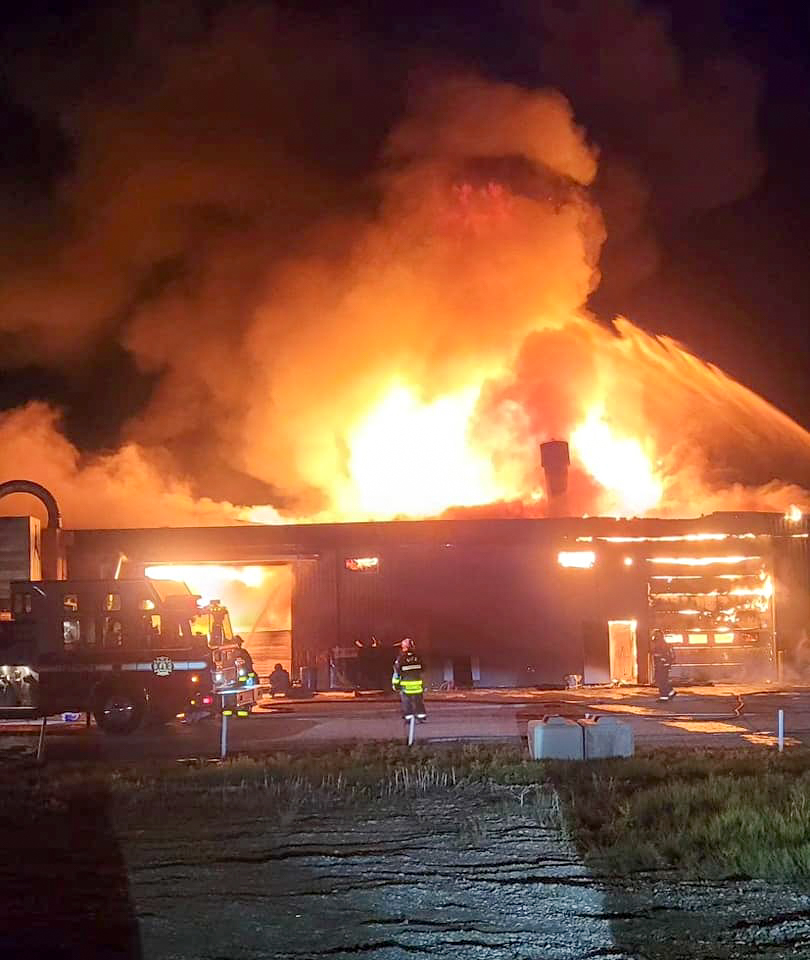
The fire consumed the entire 9,300-square-foot shop, which typically employs 25 to 30 workers making custom- and high-end cabinetry and other products for residents and businesses in Southern Alberta. Destroyed were the finished cabinets, components, and raw materials in stock, ongoing work in process, and equipment that included advanced machinery such as a Homag CNC router and Homag edgebander, as well as a dedicated finishing department.
Origins of the fire
While Hiebert Cabinets began the process of rebuilding, investigators were able to determine the cause of the fire. After reviewing the security camera footage and examining the scene, officials determined that the fire was caused by a defective battery in the area where portable power tools that used lithium batteries were stored. The fire officials could not decide which tool battery failed, as multiple portable power tools were stored together.
Hiebert Cabinets’ fire was not unique. Statistics show that fires and explosions from lithium batteries are increasing in frequency as their use continues to grow. While lithium-ion battery fires in power tools used in wood shops are particularly difficult to track, general fire incident data indicate that cordless power tools are a documented source of lithium-ion battery fires. For example, a Massachusetts fire tracking initiative identified six power tool fires among 50 lithium-ion battery incidents reported over six months. (For more on lithium-ion batteries, see sidebar at the end.)
For Hiebert, the “heartbreaking loss” of the facility was something that the company will use to grow and improve upon, he said. “We are grateful that nobody was injured,” Hiebert said, “And, our mission remains unchanged to create beautiful, functioning spaces for our customers and their families to enjoy for years to come.”

Jump into action
For Hiebert and his crew, it didn’t take long to shake off the “heartbreaking loss.” He and his employees began to plan the rebuild — there was never any doubt about that, he said — and figure out ways to complete existing orders and take on new projects. It wasn’t more than a day before the company was back to work fulfilling orders.
Employees immediately went back to work, literally the next day, at a secondary location in Coaldale, Alberta, owned by the Hiebert Group. The Hiebert Group is an umbrella organization that includes the cabinet company as well as home building firms.
Even as construction plans began on the company’s Bow Island headquarters, shop, and showroom, work to get back up to speed didn’t stop. In the couple of months after the fire, Hiebert Group workers had constructed new, temporary headquarters and showroom from the ground up.
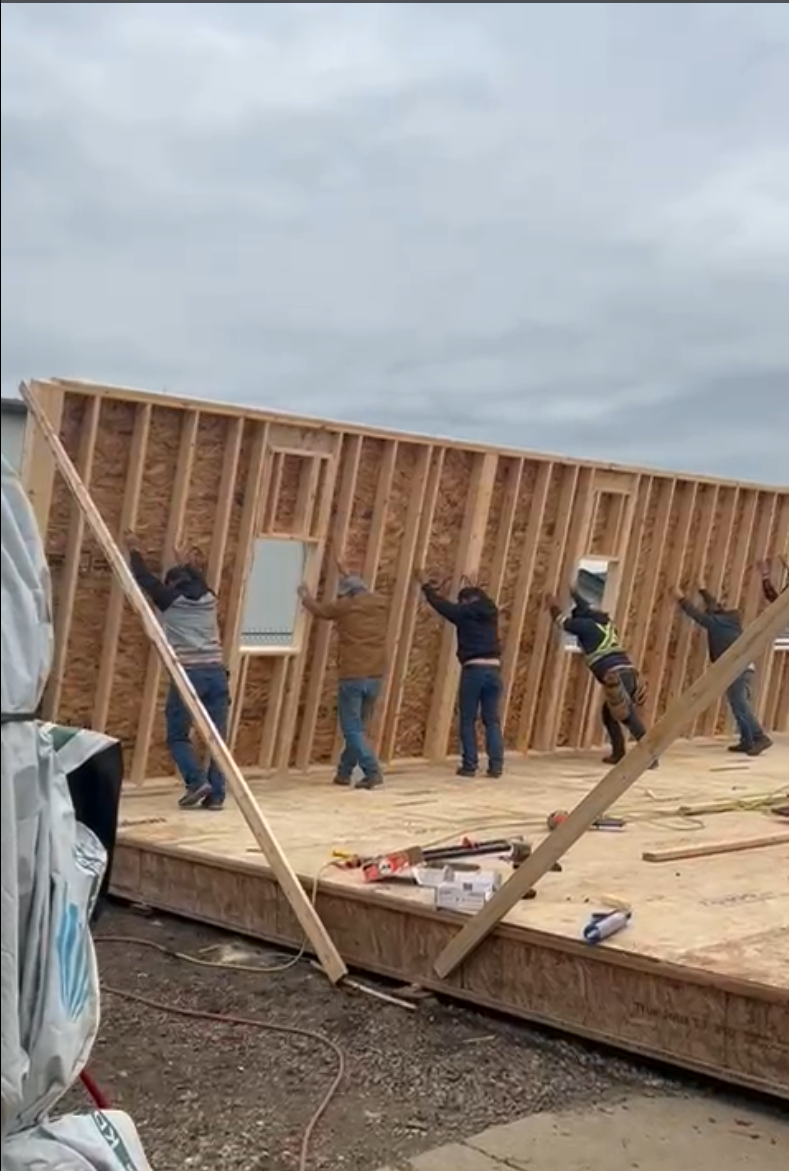
Day-to-day operations continued apace. Operating in temporary accommodations, design, sales, and office staff kept jobs moving forward, Hiebert said. Production wasn’t slowed for long either. Hiebert said that they were able to continue operations thanks to his two other Hiebert Group businesses, as well as help from a nearby Hutterite cabinet shop that allowed Hiebert to use their equipment. (Hutterites are a self-sufficient, communal living group of pacifist Anabaptist religious groups, and Southern Alberta is home to many such colonies.) John Hiebert had actually helped set up the Hutterite cabinet shop, and it was a mirror production facility to his own.
This dedication is a reflection of Hiebert himself. Hiebert said he has been mastering his craft since before he can remember. “When you take pride in the craft you love, the result is something that anyone can feel strongly about.”
There is still work to do. Manufacturing facilities are still in development, but the company continues to get projects out the door.
“Despite this challenging incident, our incredible team united,” he said. “While we’ve had to make some adjustments and set up a temporary workspace, our team worked hard every day.
“Our dedicated craftsmen continued to design and build high-quality kitchens and cabinetry. Our office staff worked tirelessly to ensure that every current and future project runs smoothly. Their dedication and expertise are what make Hebert cabinets a trusted, great name in the industry.”
In September 2025, the company hit a milestone with the opening of its first satellite showroom in Coaldale, Alberta, to allow customers to explore “custom cabinetry displays, meet our friendly team, and find inspiration for your next project.”
SIDEBAR: Growing woodshop danger
Lithium-ion battery fires are a growing concern, and wood products manufacturers that use devices with these batteries should be cautious because of the presence of flammable materials such as wood and panels, finishing materials, and more, which increases the risk of a small battery incident escalating into a major shop fire.
Lithium batteries have emerged as the power source of choice for a vast array of modern tools, including many cordless, portable power tools on the market. A lithium-ion battery fire in a portable power tool typically begins with a rapid, uncontrollable temperature increase known as thermal runaway. This creates an intense, self-sustaining fire that is difficult to extinguish and presents unique hazards, including toxic fumes, the risk of explosion, and re-ignition. Often, the battery overheats due to damage, overcharging, or internal defects, causing a rapid, uncontrollable increase in temperature.
The Massachusetts Department of Fire Services developed a tool for tracking lithium-ion battery fires that helped the agency identify 50 such incidents in six months from October 2023 to April 2024. Of the fire statistics, power tools were involved in six fires.
Mike Seiwert, senior loss control consultant, Pennsylvania Lumbermens Mutual (PLM), said he has worked on as many as 10 cases where fires in woodshops were caused by lithium-ion batteries. He said he has several recommendations for companies that use lithium battery-powered tools.
“If a battery does not hold a charge, or it shows an error code, they should quarantine it in a non-combustible area, like a metal box, so if it does short out, it’s not going to set the rest of the room on fire. I’m also telling my customers that if they have multiple chargers and multiple batteries that they’re charging at once, to consider putting them in a metal cabinet that’s at least ventilated so it’ll control or contain the fire, and then I’m also asking them to unplug the charger when they’re done, so that it’s not sitting there idle, My biggest concern is the battery sitting on the charger for days and days and days. That’s eventually going to lead to a failure in some way."




Have something to say? Share your thoughts with us in the comments below.